
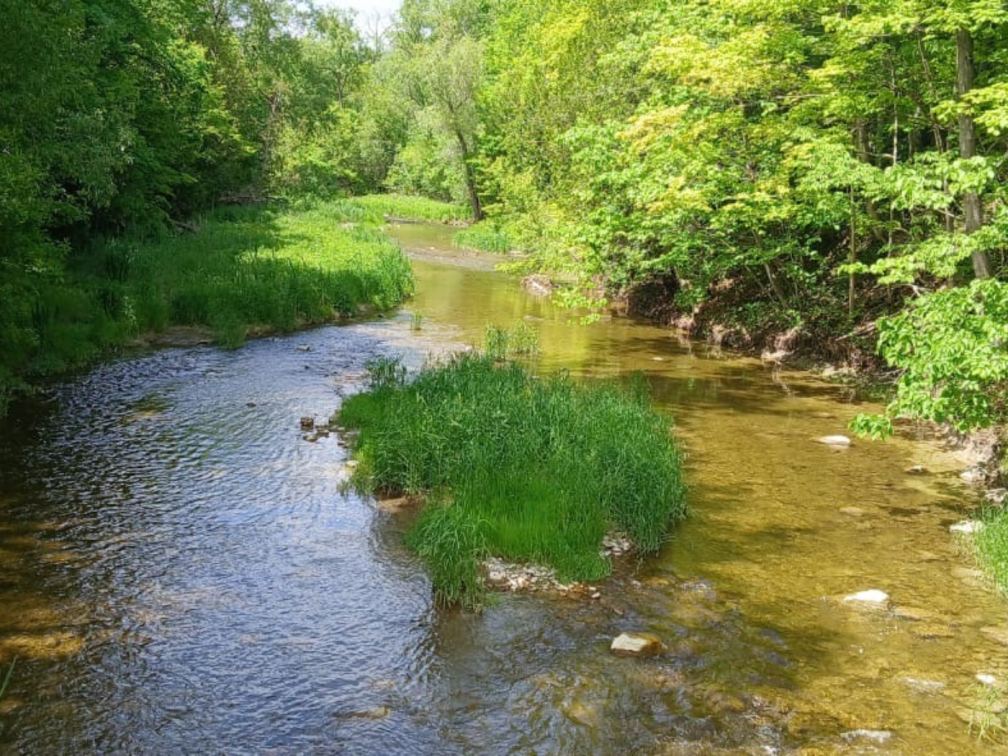
On this summer day, I sit down at my home in Toronto, Canada to write about “living water”, this year’s theme for the Season of Creation. The fresh breeze and clear sky belie the fact that recently my city’s air was so polluted with smoke from the wildfires to the north that we were told to stay indoors. Beyond my backyard, news of the historic draught in Britain and the unprecedented wildfires in France and Spain cast gloom on my summer day. Climate change and its devastating effects have undeniably gripped the world, leaving us thirsting for “living water” both literally and spiritually.
In Canada, the idea of “living water” is not often part of everyday consciousness. While Canada is blessed with an astonishing amount of water, it is often taken for granted and sorely misused. Across its great expanse, Canada contains more freshwater lakes than all the rest of the world’s countries combined! Nonetheless, despite the beauty and abundance of Canada’s waterways, most Canadians do not attribute any spiritual value to water nor feel a moral duty to care for it. Because of water’s abundance and the dominant settler-colonial mentality, Canadians do not usually respect water as a gift but treat it as a commodity to be consumed, polluted, drained and rerouted in pursuit of economic gain. Examples of water’s misuse are legion—from enormous toxic tailing ponds left behind by petroleum extraction, to ecosystem-destroying hydro electric dams and the consumption and pollution of local waterways by industrial manufacturing and mining.
However, water is understood very differently by the Indigenous people of Canada (or Turtle Island as it is called in Indigenous culture). Water is at the heart of Indigenous spirituality, and the idea that water has a living spirit is a common and deeply held belief. All the waters of the world, from the oceans to the smallest stream, are joined together as Mother Earth’s bloodline, giving life to and nourishing the whole earth and all her inhabitants, human and other-than-human creatures alike. Water is a living relative, a teacher and source of strength that remembers everything that we do to her. But water cannot speak for herself, so we all have a responsibility to give voice to advocate for her, protect her, and in the face of her abuse, pray for her and work towards her healing. Indeed, the Indigenous relationship with water is rooted in prayer and ceremony. The most poignant of these is the water walk, a multi-day ceremonial prayer for water in which women, the traditional water carriers and protectors, carry small quantities of water along the route of sacred waterways. On these walks, every step is taken in prayer and gratitude for water, our life-giving force.
And yet, Indigenous peoples are those most harmed by water’s misuse in Canada. Currently, around 60 Indigenous communities cannot safely drink their water, with some water advisories having been in effect for decades. Many other Indigenous peoples find their sacred waters threatened by industrial pollution, including Grassy Narrows First Nation in Ontario which has been impacted by mercury contamination for very many years. All this while Canada’s federal government spends 18 times more in fossil fuel subsidies than on providing communities with clean water. Water injustice is most strongly felt in Canada by those who respect water the most.
In this Season of Creation may we join the Indigenous peoples of Canada to pray with and for the living waters of this earth that she be healed and bring healing to a world thirsty for her living spirit.
