
“Are we going to eat with our hands?”, one youth asked as we discussed how to celebrate Laudato Si’ Week. I approached the Myitkyina Parish Youth leader together with his committee to asked them to facilitate two activities – celebrate the opening of the Laudato Si’ Week with the celebration of a Mass for Creation and film-showing of the documentary “The Letter” to parish youth followed by a panel discussion allowing young people to ask questions from a panel composed of youth development workers.
Traditionally, many Burmese people (Bamar) eat with their hands (especially rice and curry), although chopsticks are also commonly used in Myanmar, particularly for noodles and some dishes. Kachin people traditionally also eat with their hands, especially when eating rice-based meals and traditional dishes. In Kachin culture, eating is often a communal experience around shared dishes, and hands are an important part of connecting with food.
As a Filipino, I also eat with my hands at home. But since arriving in Myanmar I have learned to use bamboo chopsticks when eating. Most shops in the country use single-use bamboo chopsticks wrapped in plastic. Shops and markets also always use single-used plastics when packaging or selling products. During events single – used plastics continue to be used to wrapped tables and food. Food wrapped in leaves are provided but are now wrapped in single-used plastic. Small water-bottles are also distributed to everyone. After every event, we generate large amounts of plastic wastes.
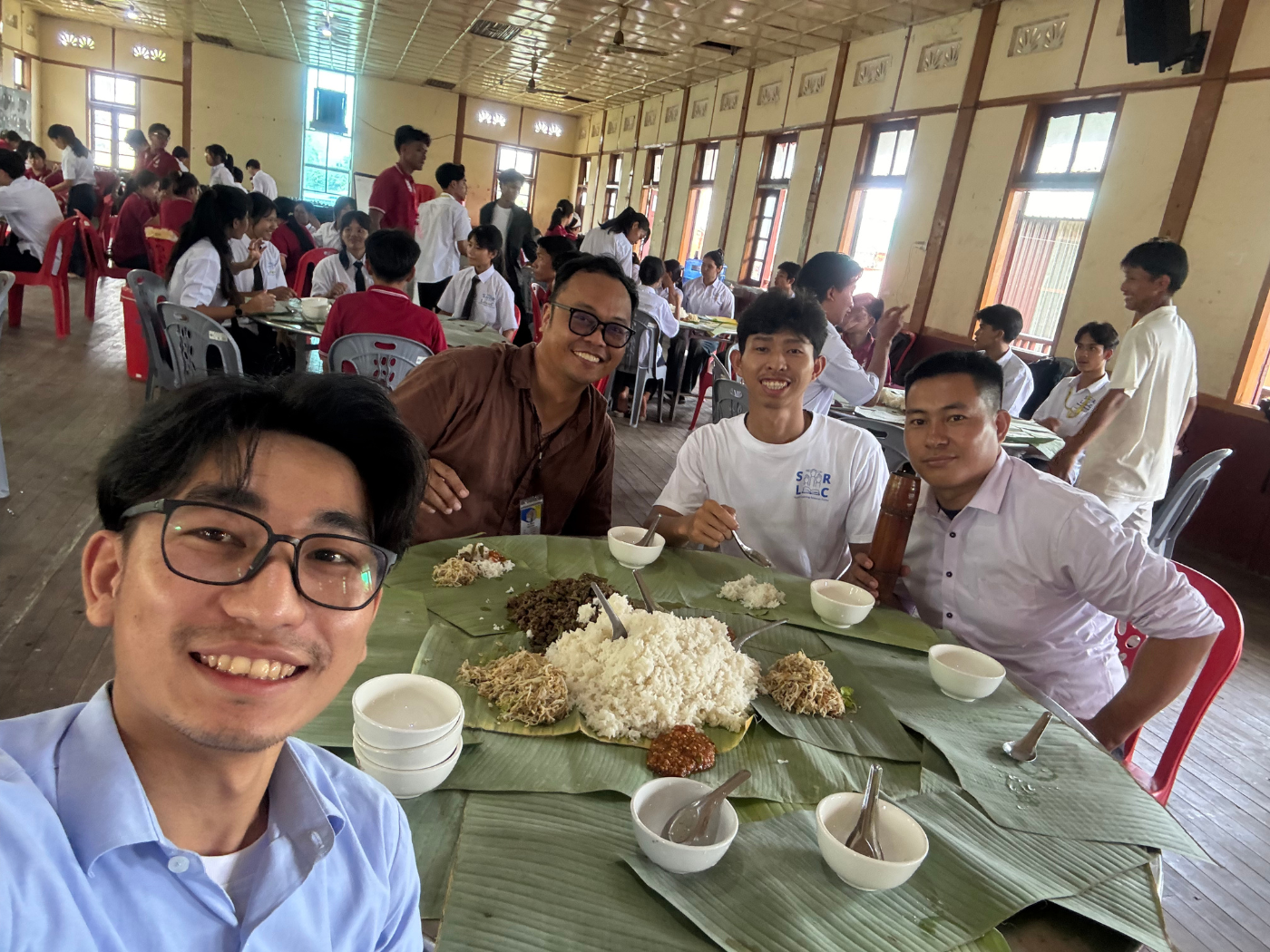
This was not always the reality. Traditional leaves were used to wrap food in the past. Mothers would carry baskets to the market. Drink from bamboo cups and ate with our hands. We never used plastic.
That day the group decided to celebrate a “plastic free” Laudato Si’ Week.
Have you tried eating with your hands?
When we receive Christ, we receive him with our hands. Hands that are bruised and wounded. Hands that also touch and help friends. Hands that toil the land and protect it. Hands that harvest and finally hands that bring the fruits of the Earth to God.
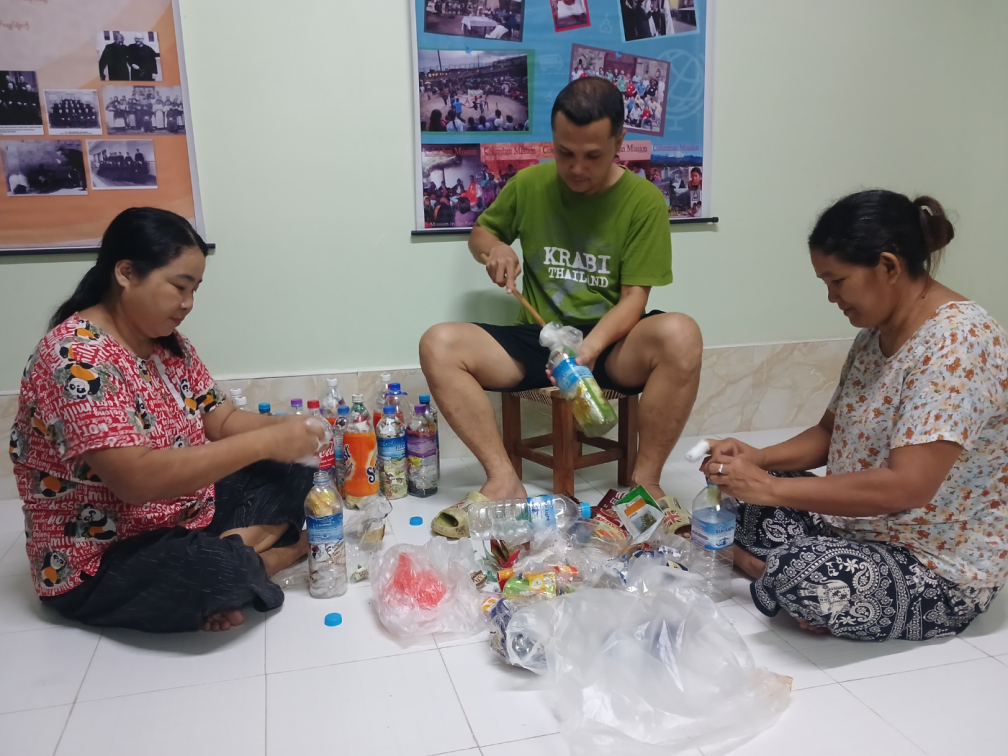
Three lessons we can learn from eating with our hands:
Connection and Presence — “Food is relationship.” When we eat with our hands, we touch, feel, and experience the food directly. It reminds us that eating is not only about filling our stomachs but about being present and connected. Jesus often shared meals with ordinary people. The table became a place of friendship, acceptance, and communion.
Humility and Simplicity — “We are part of creation.” Using our hands reminds us that we come from the earth. Before tools and utensils, humans used their hands to gather, prepare, and share food. It can teach gratitude for farmers, nature, and the work behind every meal.
And finally, Community and Sharing — “No one eats alone.” Hands are used to share food, serve others, and participate in a common meal. In many Asian and Indigenous cultures, eating together strengthens family and community bonds. Kachin cultural connection: Traditional meals often emphasize hospitality, generosity, and sharing. The act of offering food is a sign of respect and relationship.
Hands remind us that food connects us — to God, to the earth, and to one another.
This year’s Laudato Si Week theme “From Hope to Action,” reminded us that the time to ACT is NOW. The Earth cannot wait. Let’s start eating with our hands.
