
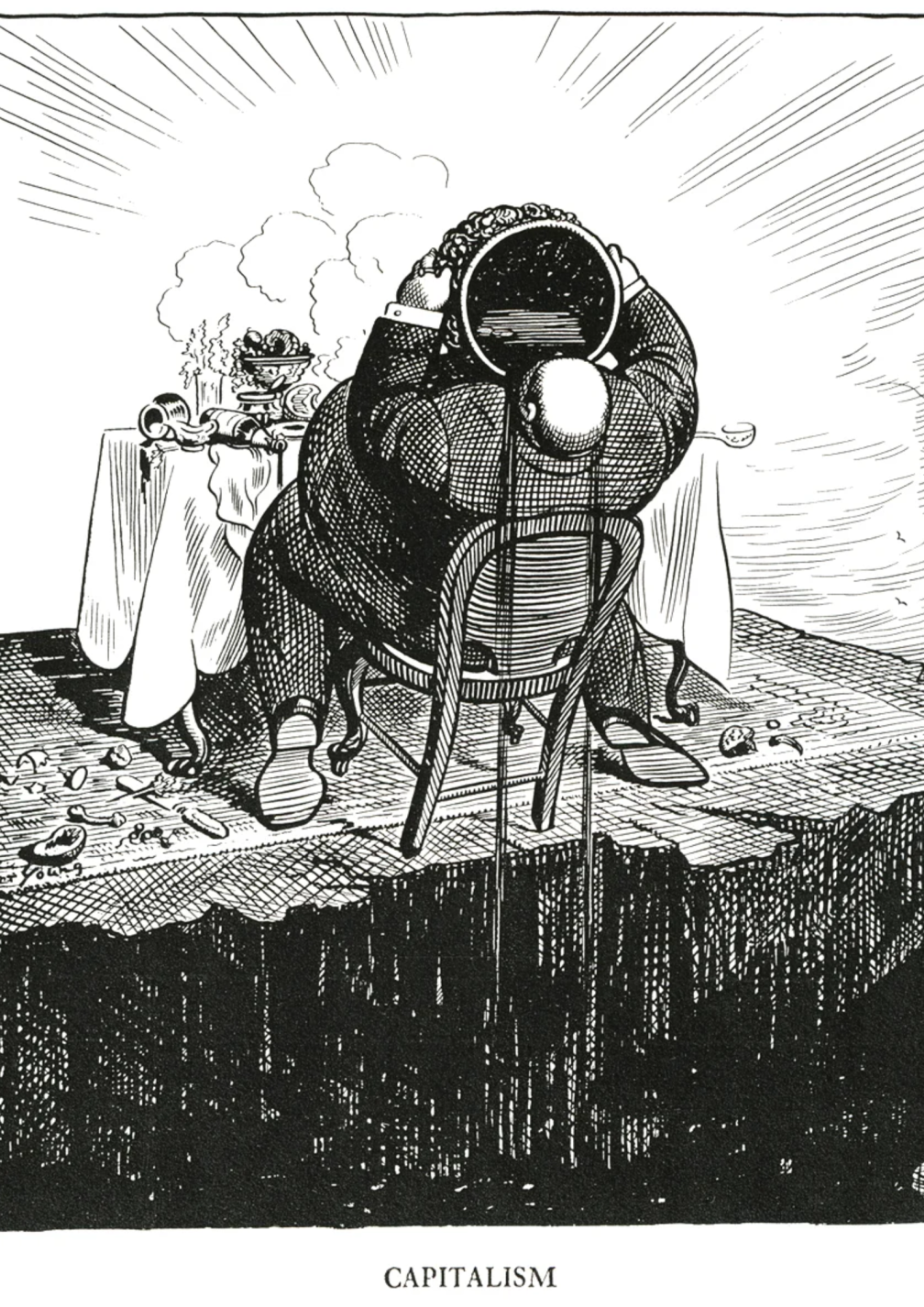
The early climate movement portrayed net-zero in non-zero-sum terms: we are all in this together, all sharing in and benefitting from a healthy climate. However, in her recent book, Existential Politics, the economist Jessica Green argues against this: the fossil fuel industry faces an existential threat from net-zero. This means that those who own the fossil fuel industry have a powerful material interest in resisting net-zero—for example by lobbying for carbon trading systems that disguise rather than offset emissions, and systems of self-regulation that inhibit accountability.
These interests may also outweigh any deeper interest in the health of the planet. Many of those who own the fossil fuel industry will not live to see the worst of climate change, and those that will may be insulated from many associated harms by their wealth. In this context, they are arguably more threatened by the radical economic transformations needed to genuinely address the problem than the problem itself. In short, while we all have a stake in the planet, we do not have an equal stake, and this brings unequal incentives to protect it.
Net-zero is, in this crucial respect, a zero-sum game after all.
This situation has some practical implications: individual actions to reduce one’s carbon footprint are important. However, a great deal also hangs on high-level decision-making, and the willingness to make these decisions specifically against powerful business interests. It is therefore vital that we do not allow our efforts at addressing the climate crisis to end with individual actions. Rather, we must work collectively to bring pressure on political and business leaders, counteracting or removing the material incentives to which we and the planet are currently hostage.
However, this situation also has a deeper significance. Green’s analysis is challenging from a Catholic perspective: Catholic Social Teaching teaches that people form societies to provide goods that we all need, but cannot obtain for ourselves as individuals. In this way, society is founded upon a shared orientation towards the Common Good. Unity and shared interest are thus more fundamental to society than conflicts of interest.
Green’s analysis is troubling because she raises the spectre of fundamental conflict: if she is right, then we live in a world where society serves partial rather than common interests— regardless of its original or proper nature. Those who own the fossil fuel industry have interests that directly conflict with those of others, and through lobbying and other methods have co-opted society at the level of government and the economy to protect their interests —at the expense of both others and the planet in general.
So what are we as Catholics to make of this?
Despite everything, we do still have an interest in common: Differing material incentives may make it difficult to locate this shared interest in material things—but humans are not made for material ends alone. We are “not disconnected from the rest of creatures, but joined in a splendid universal communion” (Laudato si’ no. 220) that goes beyond our own material interests. This means that a good human life is a moral life, in which we genuinely treasure both human and non-human creation as a gift from God. In this respect, no one can genuinely have a good life while failing to respect the dignity of others and the world we share.
It is therefore the task of Christians to pursue worldly justice not merely as justice, but as evangelisation, calling business leaders back to the moral life for which God has created us. Worldly justice is not solely important in a worldly sense, and while emissions can be traded, omissions cannot. It thus falls on us to remind those who own the fossil fuel industry that, even if our material incentives differ, justice is in their best interests nonetheless.
