
“I’m just another migrant,” he says. His life has been a continuous crossing of borders that has led him to understand the pain of the immigrant. The mission centre in El Paso is a few feet from the border barrier wall. Its work is to listen, welcome, and give hope to migrants fleeing violence, poverty, or persecution. Many will not pass. Others are being held by ICE – United States Immigration and Customs Enforcement. They all have a story that, according to Fr. Alvaro, “is a broken Christ.”
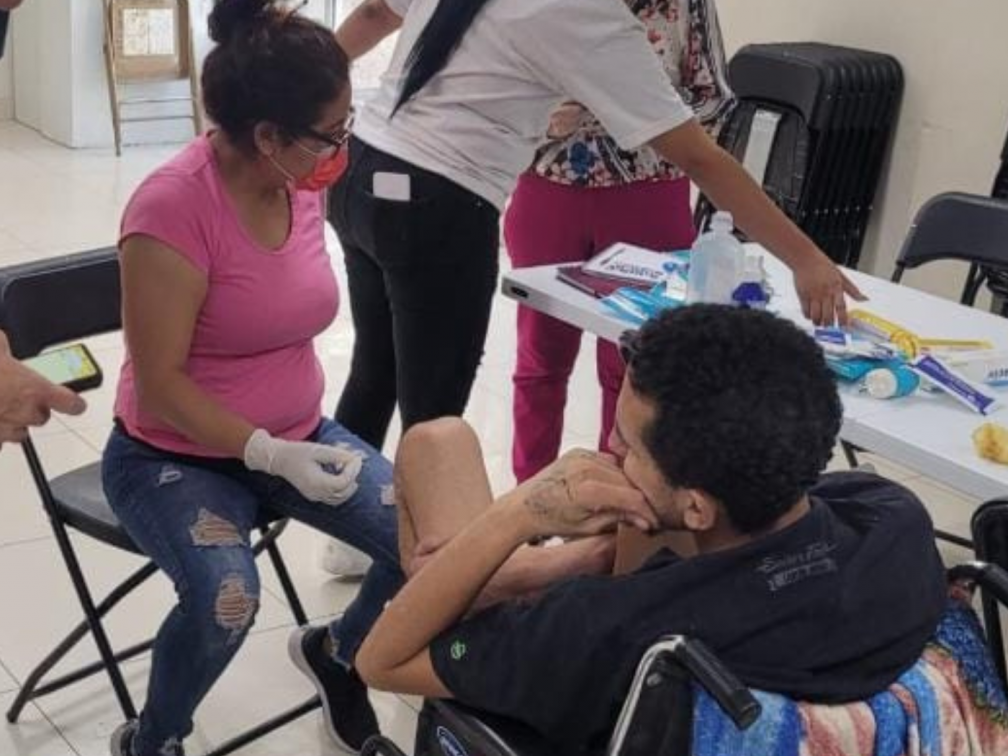
He joined the Columbans in 1993 and training took him first to Fiji and work in a leper clinic. Then to Chicago to study theology and to Hong Kong, where he worked for six years with Filipino domestic workers. “Every place transformed me,” he admits. It was in Hong Kong where he understood something key: “I don’t work with migrants, I share with other migrants. I am a migrant.” Awareness of being a foreigner became the engine of his faith. In Juárez six years ago, “600 people were sleeping outside a church waiting for food and 22 shelters were operating.” Under the current U.S. administration, the flow has been reduced “almost to zero,” but the problem has not gone away. “Today, the wall is gigantic; they put barbed wire on top of barbed wire and are painting it black so that it absorbs more heat,” he reports. Those who manage to cross – many illegally – stay in El Paso or continue to other cities. But most are stranded in Juárez, caught between desperation and violent gangs.
“Behind each migrant there is a brutal story,” he says. He gives examples: A woman from a Latin American country borrowed $12,000 to pay a trafficker. When she finished paying – $20,000 with extortionate interest – she was arrested by ICE. “She’s detained and will be deported.” A couple with two small children walked, took trains and buses, but were kidnapped and had to pay ransom. They are still in Juárez. “Migrants take on a face, smell, and colour when we sit and talk,” says Fr. Alvaro.
He visits two ICE detention centres in El Paso. “Many people are there just because they are migrants. There have not been charged with anything.” They are transferred from one city to another: two months in Miami, two weeks in Florida, two months in El Paso. “The process drags on.” He hears of mothers detained while their children are left with an aunt or a neighbour; parents do not know when they will hug their children again. The mission centre gives practical help and is open to all religions.
In the 1980s, some of Fr. Alvaro’s Chilean family went into exile in Europe and he understands uprooting. That historical memory prevents him from being indifferent. “Venezuelans are coming out of a dictatorship. They leave because they have no other choice, or because they are being pursued, or they need food. And there are lots of parallels with migration from Nicaragua.”
He rejects any sugar-coated vision of migration. He talks of people who abandon everything they built because one night gunmen threatened to shoot their family. “You have to look at the face of the migrant beyond our own fears,” he insists. “I am a migrant. Each of us, at some point, can be the foreigner.” He asks not to judge those who cross borders without papers. “Behind it there is a history of violence, of debt, of broken dreams… and also of hope. Despite everything, they continue to walk.”
