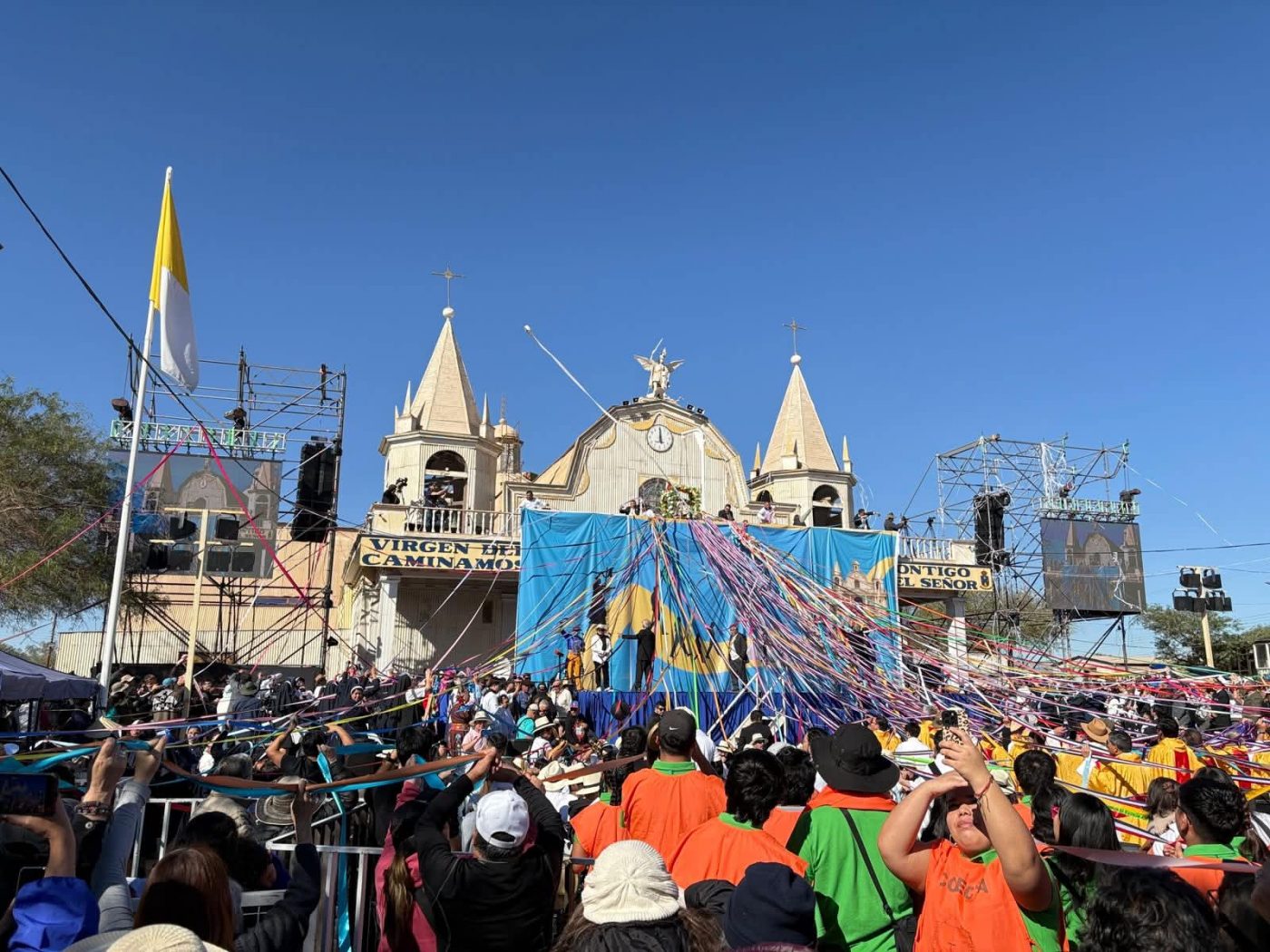
Serving as a missionary in northern Chile has taught me that faith often speaks in ways I do not expect. One of the most powerful experiences for me has been the annual pilgrimage to La Tirana, a small desert village that welcomes around 250,000 to 300,000 pilgrims every July for the feast of Our Lady of Mount Carmel.
The first time I attended, I was overwhelmed. The colourful costumes, especially against the desert backdrop, the constant rhythm of drums that goes through the whole night and only stops when mass is celebrated in the main Church. And even the masks worn by some dancers were unlike anything I had seen before. I wondered how all this could be part of a Marian celebration. But instead of judging what I did not understand, I chose to watch, listen and just savour the moment.
I saw elderly pilgrims walking for kilometres under the desert sun to fulfil promises they had made years earlier. I saw dancers continuing despite exhaustion, offering each step as a prayer of thanksgiving. I saw families quietly praying before the image of Our Lady, bringing their hopes, struggles, dreams and gratitude to God.
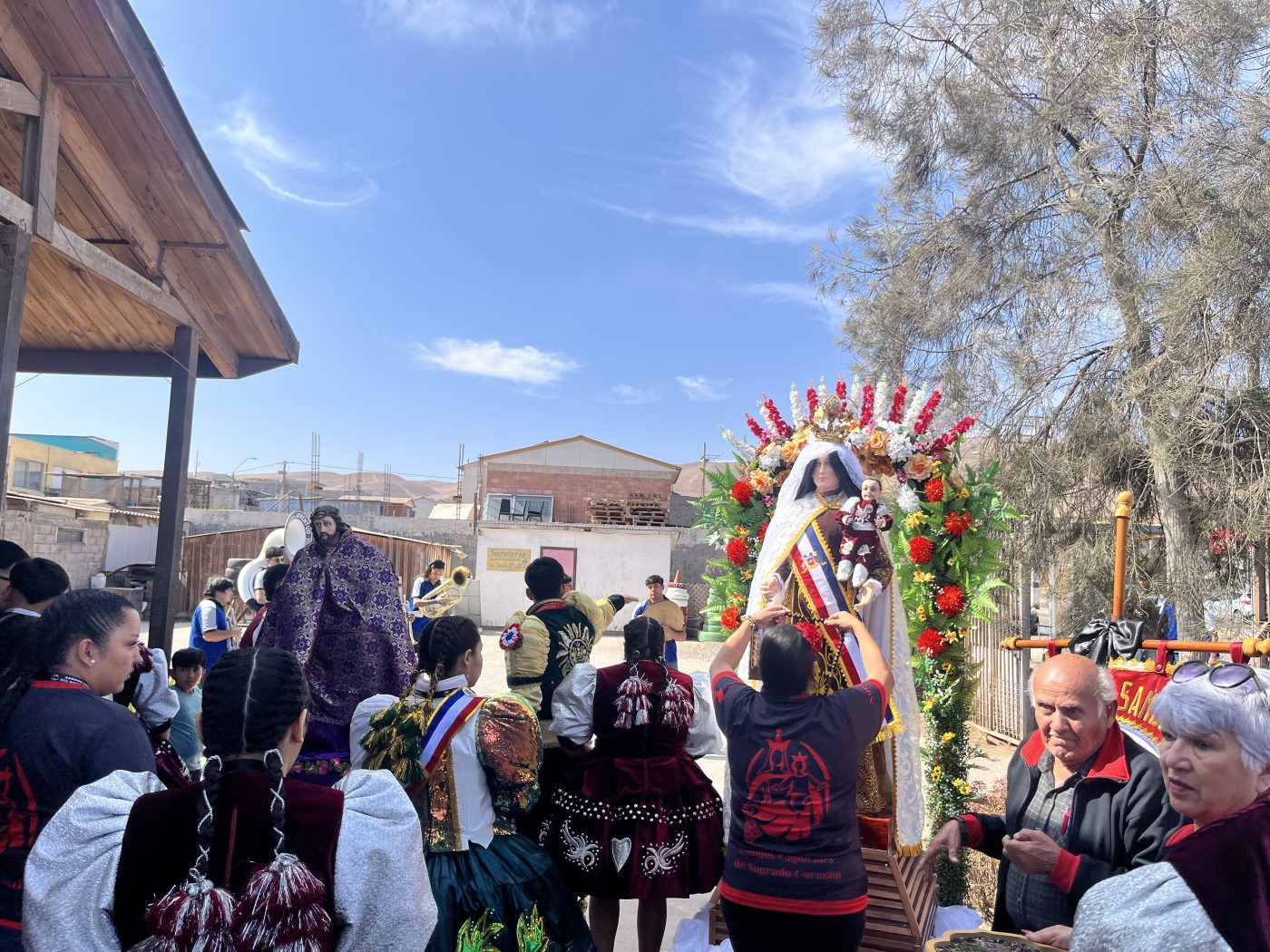
Slowly, I realised that La Tirana is much more than a festival. It is where faith, culture, and peoples meet. Indigenous Andean traditions, the faith of Aymara communities, the heritage of Chilean, Peruvian and Bolivian miners, and the Catholic faith brought by missionaries have converged to create a unique expression of popular devotion. Today, the celebration has become even richer, with growing participation from migrants from Colombia, Venezuela, and other Latin American countries who have made northern Chile their home. Their presence has added new expressions of faith and devotion to the festival. Here, culture becomes a language of faith – a living expression of people’s love for God and for our Lady.
As a foreign missionary, I have been reminded by La Tirana that God is already present among the people long before I arrive. As I always remember, one of my professors, when I was a seminarian, told us, “God is already present in the cultures we encounter. God is always ahead of us.” I think Pope Francis, in one of his addresses to catechists, said: “This is fundamental for us: God is always ahead of us!… God is already there. Jesus is waiting for us in the hearts of our brothers and sisters.”
Mission, I believe, is not about replacing a culture but about discovering how Christ is already alive within it. For two years now, standing among thousands of pilgrims, I no longer felt like an outsider. I felt like a fellow pilgrim, grateful to witness a Church in which diversity is not a barrier but a beautiful gift that enriches us all.