
The Chango people in northern Chile are an indigenous community who have roots stemming back 8,000 years to the Chinchorro Tradition. They are renowned as expert fishermen, navigators, and gatherers. They famously built rafts from sea lion hides and cultivated deep knowledge of the Pacific coast. Recognition expanded in 2008 with the creation of Marine Coastal Spaces for Indigenous People (ECMPO), which acknowledged their traditional uses of the sea and paved the way for official status.
The residents of Caleta Chañaral de Aceituno were legally recognized by the Chilean State in October 2020 as the country’s tenth indigenous group. This recognition was earned through the community’s struggle, archaeological evidence, and oral heritage, strengthening the ongoing existence of the Chango people.
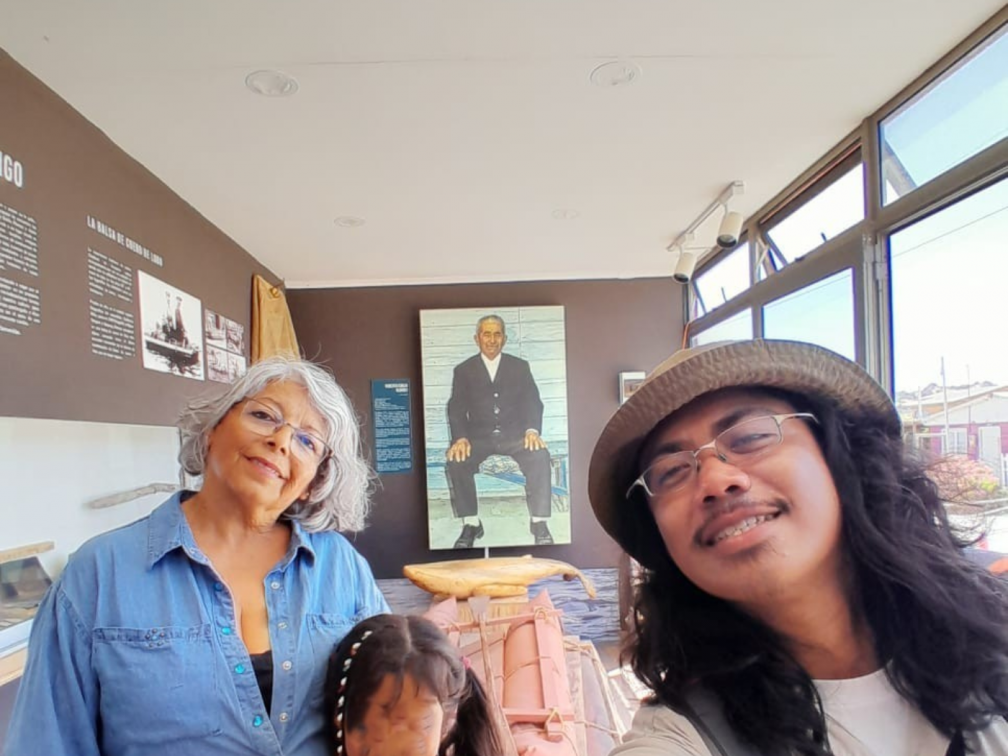
I listened to Senora Ada and noticed the joy and dignity she expresses in her story. Her sharing went beyond genealogy – she emphasized a message of visibility as central to the Chango people’s heritage. At the end of our conversation, when I asked for her message to me as a visitor, she replied: “visibility.” Her request was simple—make the story of the Chango people visible, underlining visibility as the article’s key message.
Craft of Survival
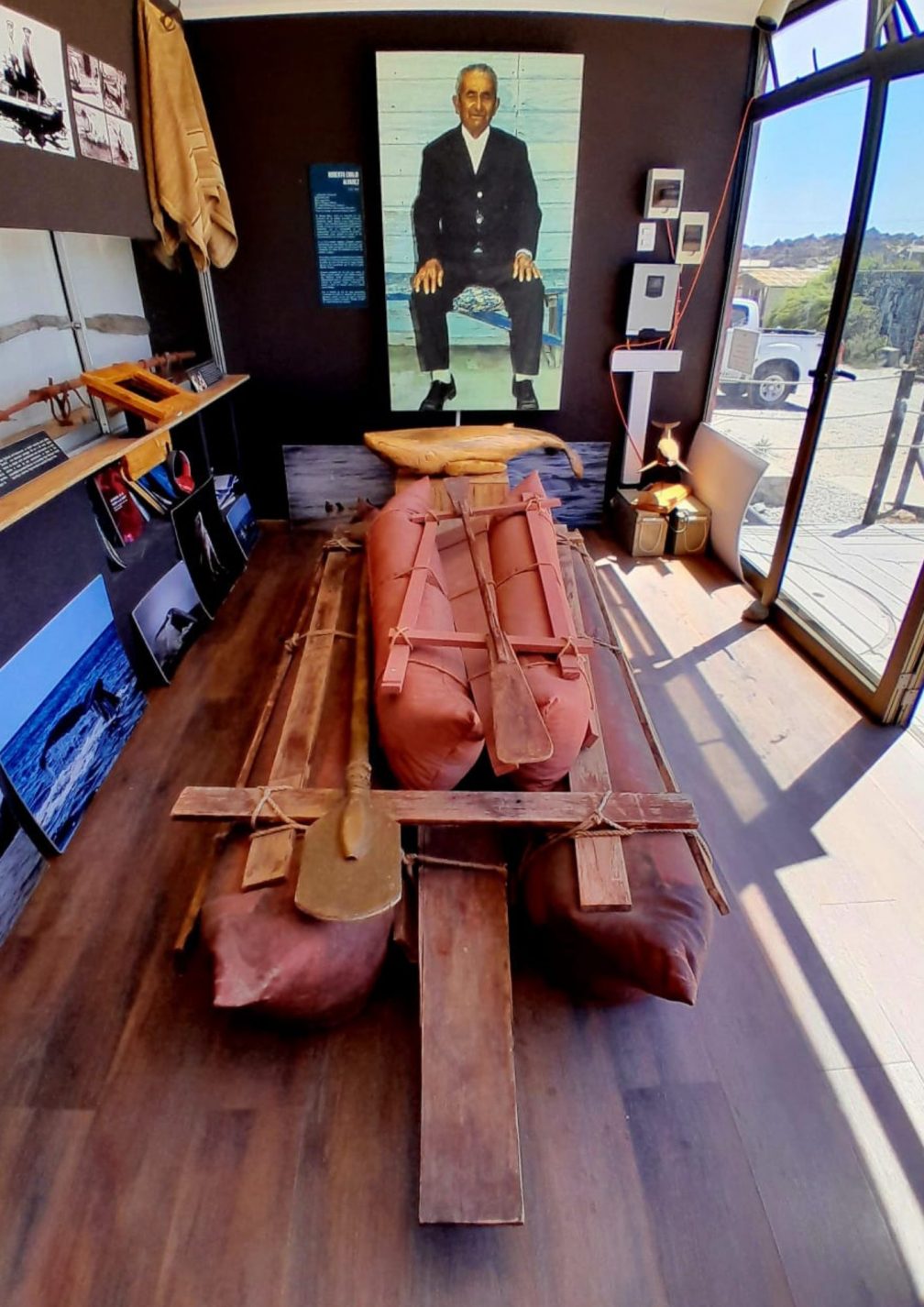
What strongly binds the heirs of the Chango People to their ancestors is their way of living and their daily practices. Ada spoke of her grandfather, Robert Alvarez (Chango Roberto), who was among the last to build boats from sea lion leather. She remembers him selecting quality hides from young sea lions, unblemished and untorn from colony fights. He stitched them with atacaman cactus thorns gathered from a special hill, then fastened them with animal gut. He sealed the hides with oil, blood, and clay, blowing air into them with his own lungs until they floated. Historically, the Changos people used inflatable boats made of sea lion leather. It is a tradition reflecting millennia-old indigenous engineering and ecological wisdom transformed into maritime technology.
Kinship and Fortitude
Her grandparents raised thirteen children, though many, sadly, died young. Her mother, one of the survivors, carried this strength forward. In those days, with a vulnerable health system, child mortality was high. Senora Ada’s grandmother was a criancera, a woman dedicated to raising and herding animals, notably goats. She herded goats across the landscape and even ferried them to the islands in sea lion leather boats when pastures failed. To communicate, she and her husband on the other island used signal fires, each type bearing a different meaning—one for food, another for water. Her resourcefulness extended to making cheese and dried goat meat. For home use, she obtained and washed wool for mattresses, becoming a teacher of weaving and embroidery. Her grandmother’s deftness and the distinct household labors sustained life through scarcity.
Economy and Reciprocity
Her grandfather took dried fish, seafood from Humboldt Current fishing, and sea lion oil to the valley. There, he bartered for wheat, olives, and fruits. These exchanges, called cambalachas in Chilean rural coastal tradition, went beyond basic transactions, forming organic networks of communal reciprocity that connected coastal and valley people. Through cambalachas, indigenous families practiced subsistence and reciprocal aid long before the arrival of the Spanish feria market or formal trade.
Trauma and Memory
Ada recalled the 1922 tsunami, when her grandmother was a child. The fear from that disaster marked her grandmother for life, and she rebuilt her home with foresight born of catastrophe. This explained why the ancestral house of the Chango, located up the hills, was far and difficult to reach. In Chile, this is called memoria histórica—a historical memory linked to trauma passed down through generations. It reflects a concrete resilience as communities adapt to risk, drawing on inherited memory.
Psychology of Invisibility
Perhaps invisibility itself can be a psychological wound. In school, Ada’s teacher insisted that Changos no longer existed. Ada raised her hand and replied, “My grandfather is in the Caleta (coastals); he builds the balsa (boat made of sea lion leather).” This was her lived disagreement, experiencing denial of Chango’s existence and her own identity—a silent burden for a girl to carry. The Chilean State’s 2020 recognition of the Chango people went beyond law and politics; it was a gesture of healing, restoring dignity and a feeling of belonging.
Turning now to the next generation, I listen to Ada’s granddaughter.
I listened to Lola (not her real name). While her grandmother told stories, Lola was keen to share hers. She is only five, yet in her words, I heard resonances of the sea, family, and fortitude. Her testimony, though childlike, emphasized that identity is not only reflected in elders or state recognition, but also in children’s voices—the human dignity of being seen and heard. Children have a unique way of naming the world, especially through their play and what they treasure.
Family and Sea diving
She spoke about her uncle Felipe, a sociologist, and her aunt Valeria, a biologist, who operate a diving company, La Mar. I had met them the previous day while diving in the national marine reserve. Lola described her little cousins, one of whom was just beginning to speak a few words because she was so young. Lola admitted she cannot yet swim well, though she can float, and her cousin helped her touch the sea floor, which gave her a sense of safety. Even from her young perspective, family life is deeply connected to the sea, diving, and the cadence of tides and boats.
Knowledge of the Ocean, Culture, and Memory
Lola showed me pictures of shellfish and pointed out the tools her great-great-grandfather used to trap sea lions. Even at five, her mastery of species’ names and knowledge of her people’s practices was evident. She personified anthropology through playful storytelling and described books at home, including dictionaries of indigenous peoples like Mapuche, Quechua, and Aymara. She named her abuelita Juana, making connections between old objects and family memory. For her, culture is tangible. It is embodied in books, names, and objects. What impressed me most was how, from a child’s view, the essentials of identity are transmitted and celebrated. Lola delights in being Changa and takes pride in her community.
My Witness to the Bandera (Flag) Changa
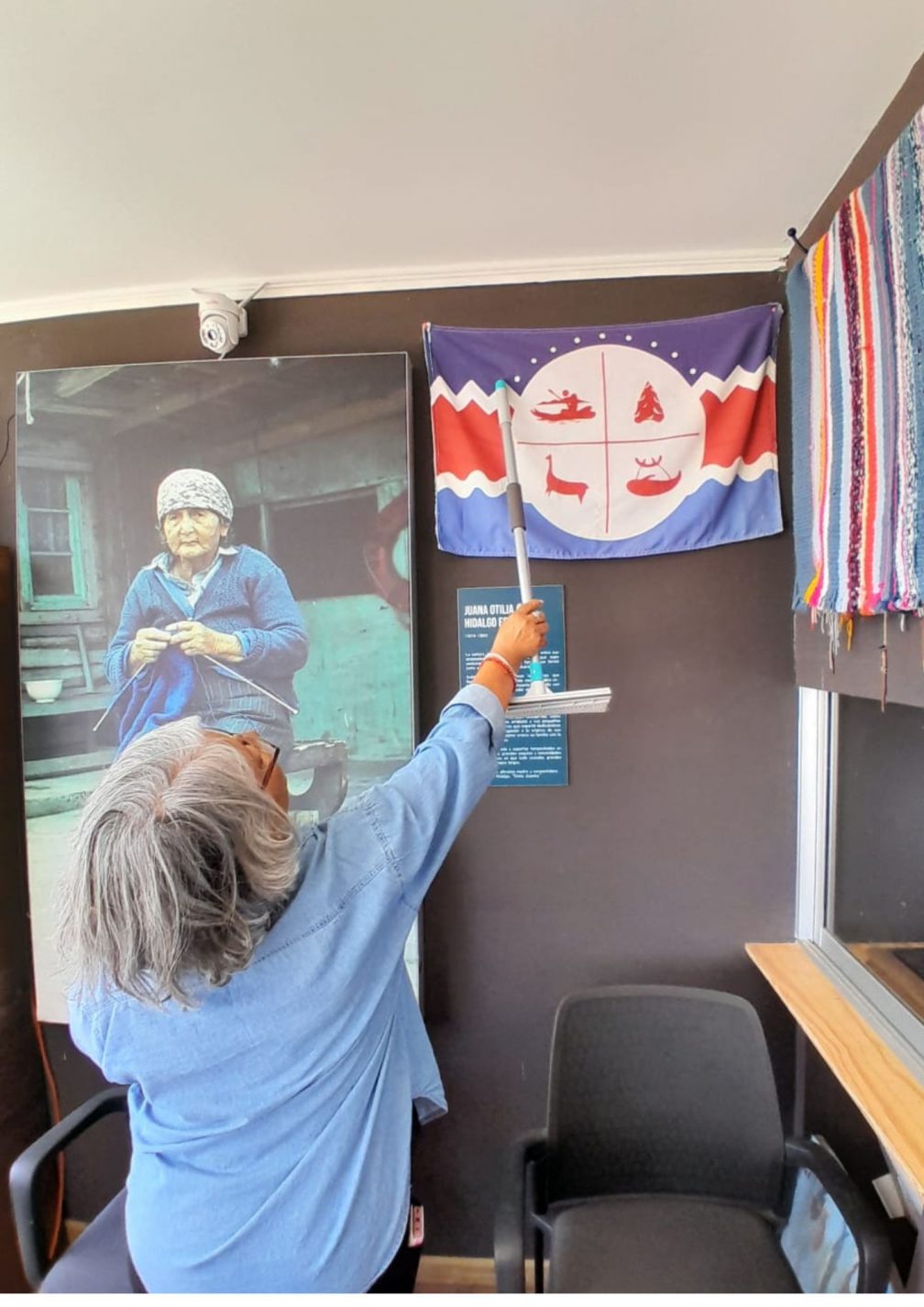
Inside the museum of Changos, I listened as Senora Ada explained the Changa flag. She exclaimed, “This flag—a Changa flag—belongs to this place. With it, all Changos are identified as part of their village.”
The flag of the Changa People is more than a cultural emblem. It is a living testament to coastal dignity and identity. Through its colors and symbols, the flag symbolizes the community’s deep bond with the ecosystems of northern and central Chile. Their humanity is tied to the sky, sea, and mist, uniting ocean, coast, hills, and ancient navigation practices. Their flag reminds all that the Chango people continue to sail through time, keeping alive memory and affirming their sacred place among Chile’s indigenous peoples.
Commitment and the Threat
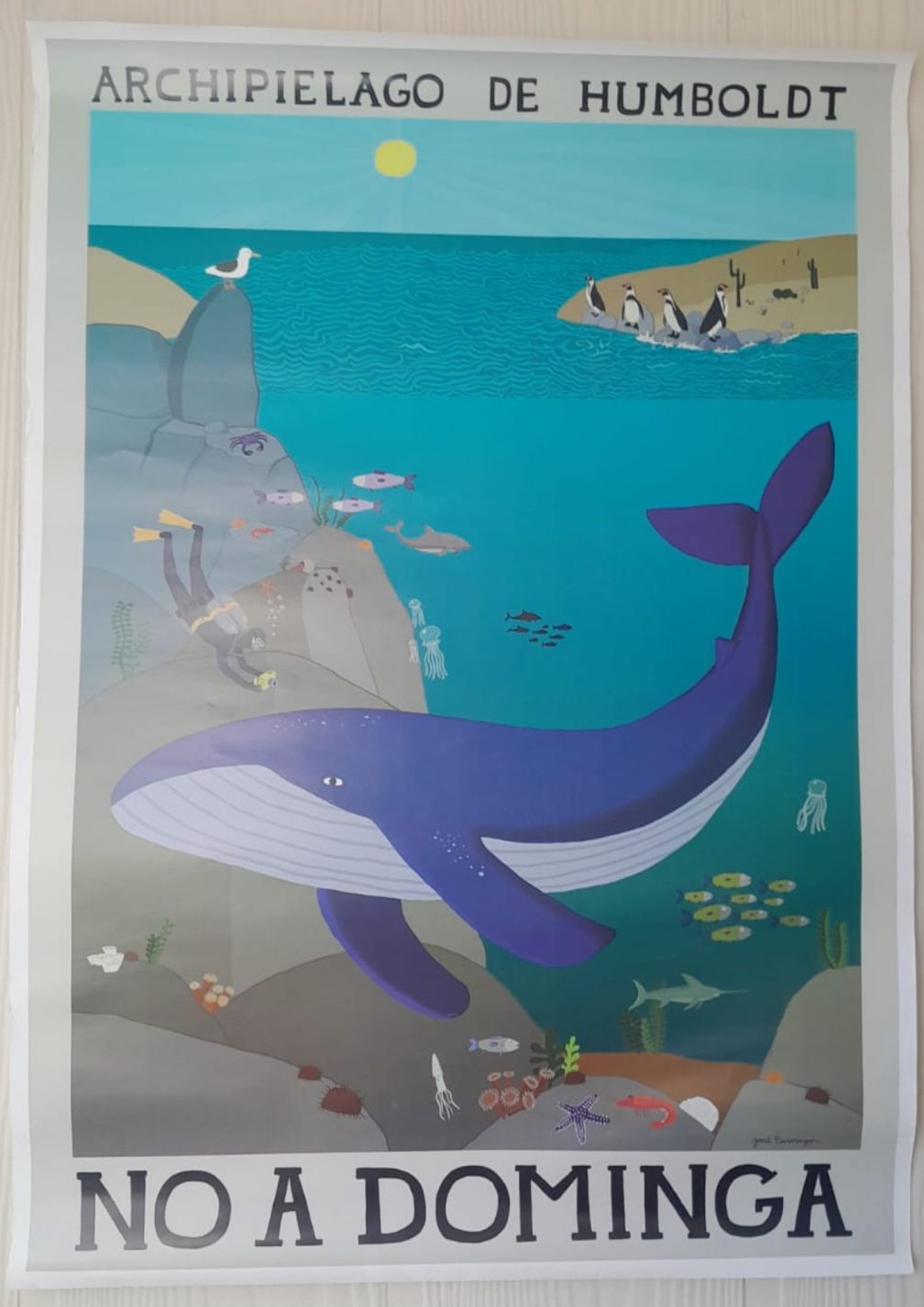
Before I left, I told Ada I also had a flag with one of the two Columban priorities: “Protection and Restoration of Biodiversity.” Ada described threats to her people and village. She explained that a mining company, Dominga, threatens both biodiversity and the communal life of Punta de Choro. The marine basin—from islands to coast—is a cradle for whales, sea lions, birds, sea otters, and penguins. For Ada, defending this territory is not abstract but a personal and communal struggle for survival. Her words were clear and urgent: No to Dominga!
As a Filipino Columban Missionary
As a Filipino Columban Missionary and seminarian, I am present to the sacred stories of the Indigenous people in Chilean Spanish. The main message I take away: collective identity, resistance against invisibility, and the fight for cultural and ecological continuity are interconnected. The stories, museum, oral memory, and visible symbols like the flag express the continuing fight for recognition and survival of the Chango people.
At the end of our conversation, I asked her what her message to me as a visitor was: Visibility, she said. She asked me to make the Chango People story visible. She told me: “Es visibilizar a mi pueblo porque durante muchos años fue invisibilizado.”
The impact of the Witnessing
As I pause in silence, the experience of Chango People drew me to Ada’s request on visibility; she has so much agency in her own dignity. After that encounter, I recall what Jesus said, ” Truly I tell you, whatever you did for one of the least of these brothers and sisters of mine, you did to me. (Mt.25:40)”. I began to ask myself, did I recognize the divine presence of God in Ada and her people? Do I recognize Jesus Christ in those who resist and demand visibility, not only in those who suffer quietly?
In our sacred magisterium, through Laudato Si’, it insists that indigenous people are principal dialogue partners in ecological conversation (LS,146). It is consistent with Vatican II’s Ad Gentes, which affirms that our Church must “discover the seeds of the Word” (AG,11) in cultures. I believe God’s Spirit was already present and at work before evangelization. As for missionaries, we cross borders because the Gospel calls us to teach ye all nations and to foster human fraternity beyond borders. Their recognition, flag, and struggle are a sacrament (grace of God made tangible) of belonging. To honor these is to affirm that “every people has a right ot live with dignity, and develop integrally” (Fratelli Tutti, 124). I wonder how these experiences can form our own spirituality of creation and our approach to mission in multicultural contexts. How can we further integrate Laudato Si’ and Fratelli Tutti into our daily missionary practice?