
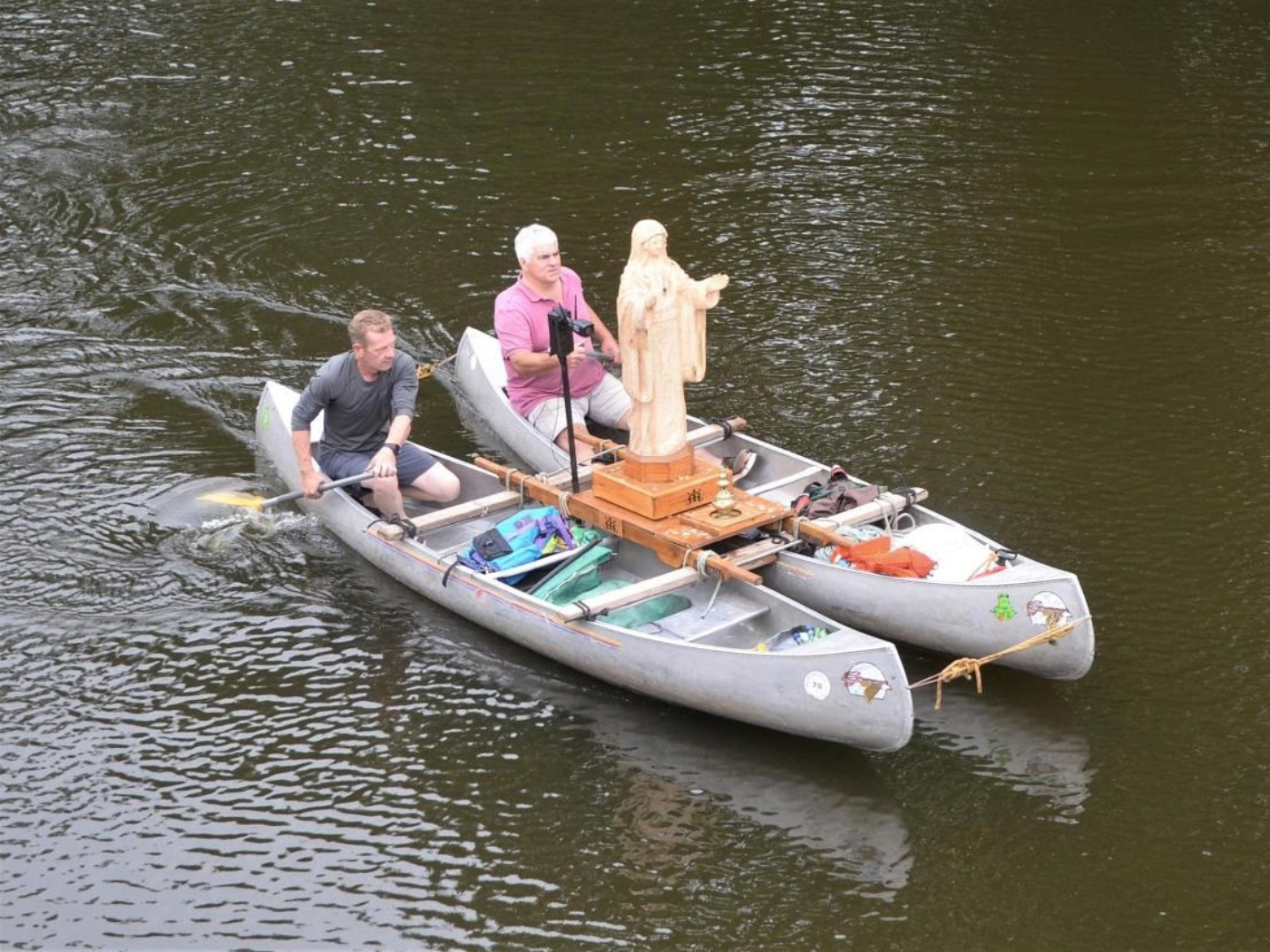
Have you seen recent media reports about appalling pollution in Britain’s rivers? Church groups are amongst those on a mission to rescue our rivers from a toxic cocktail of agricultural, sewage and industrial pollution. Four years ago, a sculpture of the Virgin Mary took a river journey to highlight pollution in the River Wye. The 75-mile trip started in Hay-on-Wye in Wales and followed the river through Herefordshire. Along the route, churches rang their bells as the sculpture passed and services acknowledged God’s gift of water. When it reached Hereford Anglican Cathedral on two canoes, the four-foot-high wooden statue was brought in for Evensong.
Internationally, Columbans working in the Southern Philippine island of Mindanao report that Indigenous People feel their waters are endangered. For the Subanen, their sacred lake, Duminagat, in the protected park of Mt. Malindang, is threatened by eco-tourism. The provincial governor has greenlighted a project that is right now stripping the mountains near the lake to make roads so that tourists can enjoy the lake’s beauty. The Subanen people’s ancient rituals, beliefs, and identity, as well as their health, are tied to Lake Duminagat.
A human right
“All people have a right to safe drinking water,” according to Pope Francis. Speaking in 2017 he said, “this is a basic human right and a central issue in today’s world, deserving a central place in the framework of public policy.” He cited UN statistics that assert, “each day a thousand children die from water-related illnesses and millions of persons consume polluted water”. These “troubling” statistics cannot leave people “indifferent,” he said.
Last October, Pope Leo, blessed a 20,000 year-old chunk of ice from a glacier in Greenland at a Laudato Si’ conference at Castel Gandolfo. He said: “Lord of Life, bless this water. May it awaken our hearts, cleanse our indifference, soothe our grief and renew our hope.” The ice slowly melted over the three days following, reminding that among the most dangerous impacts of global warming are the reduction of ice cover and the disruption of water systems that rely on ice melt.
A global conversation
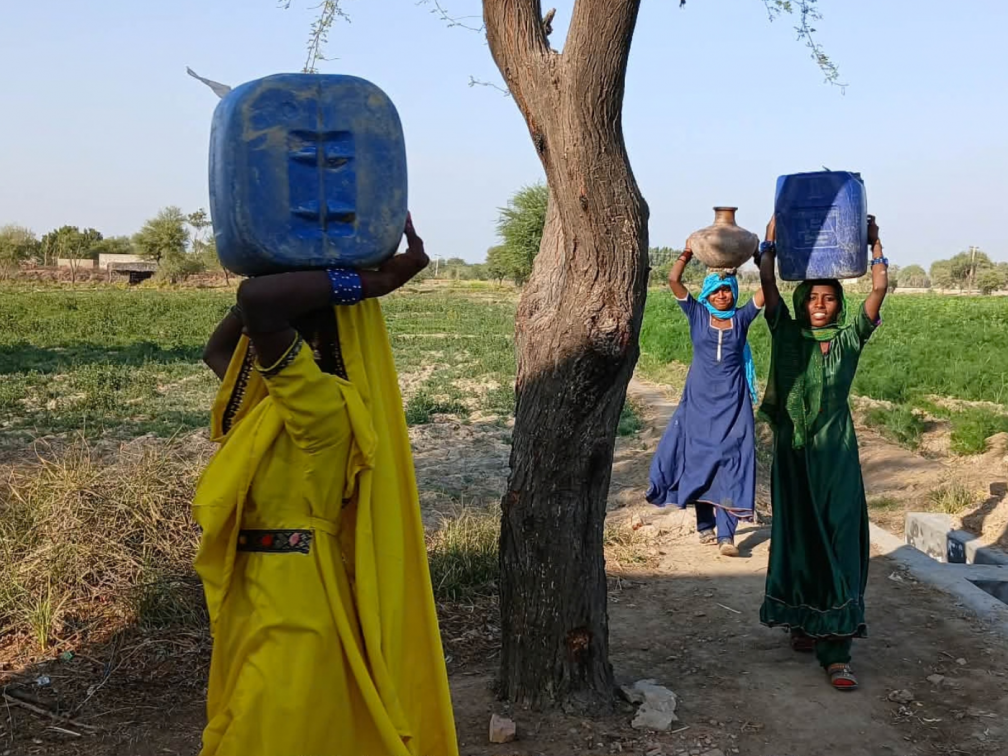
The UN Food and Agriculture Organisation warns that, “groundwater sources are being depleted rapidly,” and describes water scarcity as one of the world’s key problems. According to the UN, over 700 million people “lack ready access to improved sources of drinking water, while the number of people without reliable access to water of good enough quality to be safe for human consumption is at least 1.8 billion”. Girls especially are denied education as they must walk miles every day to collect water for their families.
Dirty water kills more children around the world than AIDS, malaria, war, and traffic accidents combined. There are huge concerns about the corporate world’s water-draining programmes. The mining industry is a huge industrial user of water, consuming between seven and nine billion cubic metres of water per year, which is about as much water as a country like Nigeria or Malaysia uses annually. This level of usage has growing environmental, social and political impacts. Popular campaigns against large-scale mining have mushroomed all over the world, and the Church is active in many of them, for example in the Philippines.
Impact of Climate Change
The Laudato Si’ Movement is urging Catholic institutions to divest from fossil fuel companies and invest in renewable energy as part of their ethical investment commitments, to respond to the Pope’s Laudato Si’ encyclical. This will help to restablise the global climate and protect water access for the world’s most vulnerable people. The 2015 encyclical identified key water problems including: climate change aggravating water security, the challenges for food production due to droughts and disparities in water availability and “water poverty”, the prevalence of water-related diseases afflicting the poor, contamination of groundwater, and the trend toward privatisation and commodification of a resource the Vatican describes as an “basic and universal human right”.
Columbans and Water
Columban Fr. Sean McDonagh, who worked for many years in the Philippines, has written extensively on theology and the environment. In his book, ‘Dying for Water’, he looked at the significance, from both an ecological and a theological point of view, of the world’s water resources. He said: “Our religious tradition should help us to rise to these challenges. Water plays a central role in the Bible and in our Christian faith. Preserving and protecting fresh water and the oceans must be seen as part of our Christian responsibility to care for God’s Earth.”
World Water Day reminds us of our shared responsibility to safeguard the precious gift of water for present and future generations. In many of the communities where Columbans serve, access to clean and reliable water is increasingly threatened by climate change, pollution, and environmental degradation. Inspired by our missionary commitment to stand with the poor and care for our common home, we work alongside local communities to protect water sources, restore biodiversity, and promote sustainable ways of living and raise awareness of the need to protect fresh and clean water as a gift from God that belongs to everyone.