
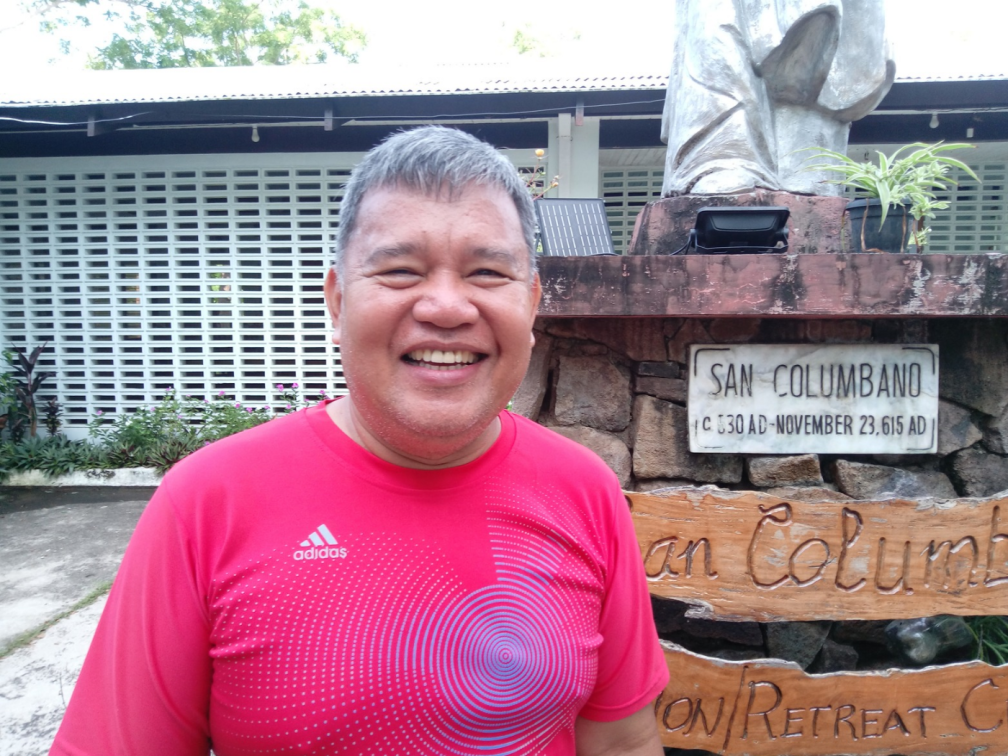
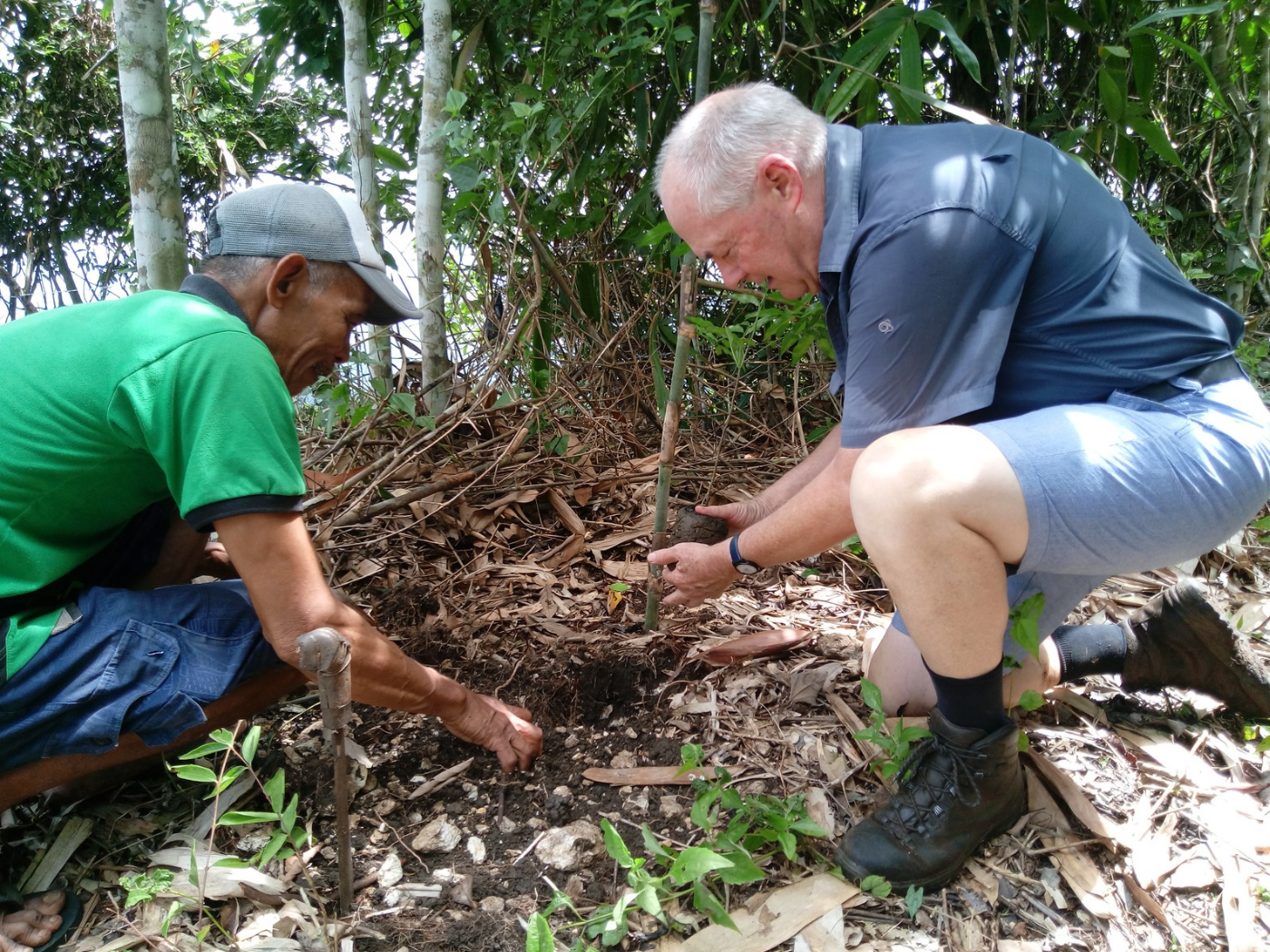
Planting a sapling on a mountain deep in a hot, humid, dripping Philippine jungle may not immediately strike you as classic Columban mission. This is what I found myself doing recently, high in the interior of the island of Negros.
However, as my guide – Filipino Columban Lay Missionary John Din – explained, such a gesture goes to the heart of today’s Christian message. I was symbolically aiding a project designed to restore Nature and people’s livelihoods. As successive popes have told us, the world is facing not two crises but one: environmental destruction and social injustice. The two problems go together, and so must the solution.
Columbans have long been enthusiastic proponents of these policies. Indeed, it could be argued that we were pursuing them years in advance of Pope Francis’s ground-breaking 2015 encyclical. ‘Laudato Si’.

This is especially the case in Negros, where a ‘Columban legend’, Australian Fr. Brian Gore, came to the island in 1983 and struggled for over forty years (sometimes at the risk of his life) to protect the rights of the inhabitants and the land in which they lived. In 2000 he set up a foundation, acquired 12 hectares of degraded upland forest in the highland area of Bantolinao, proudly named it the ‘Santuario de San Columbano’ and focussed it on reforestation, organic agriculture, raising the livelihoods of the local peasant communities and protecting them from the scourge of human trafficking. He dreamt this would become a model that could be followed throughout the island.
Brian died on Easter Sunday in 2025. Fortunately, there were Columbans on hand willing to keep his dream alive, including my hilltop companion that morning, John Din. John had agreed to continue coordinating the foundation and ‘santuario’ after Brian’s death, a role he was eminently equipped to fulfil. (Since becoming a Columban Lay Missionary in 1992 he’d worked extensively in Brazil and Peru before taking up a number of responsibilities in his native Philippines.)
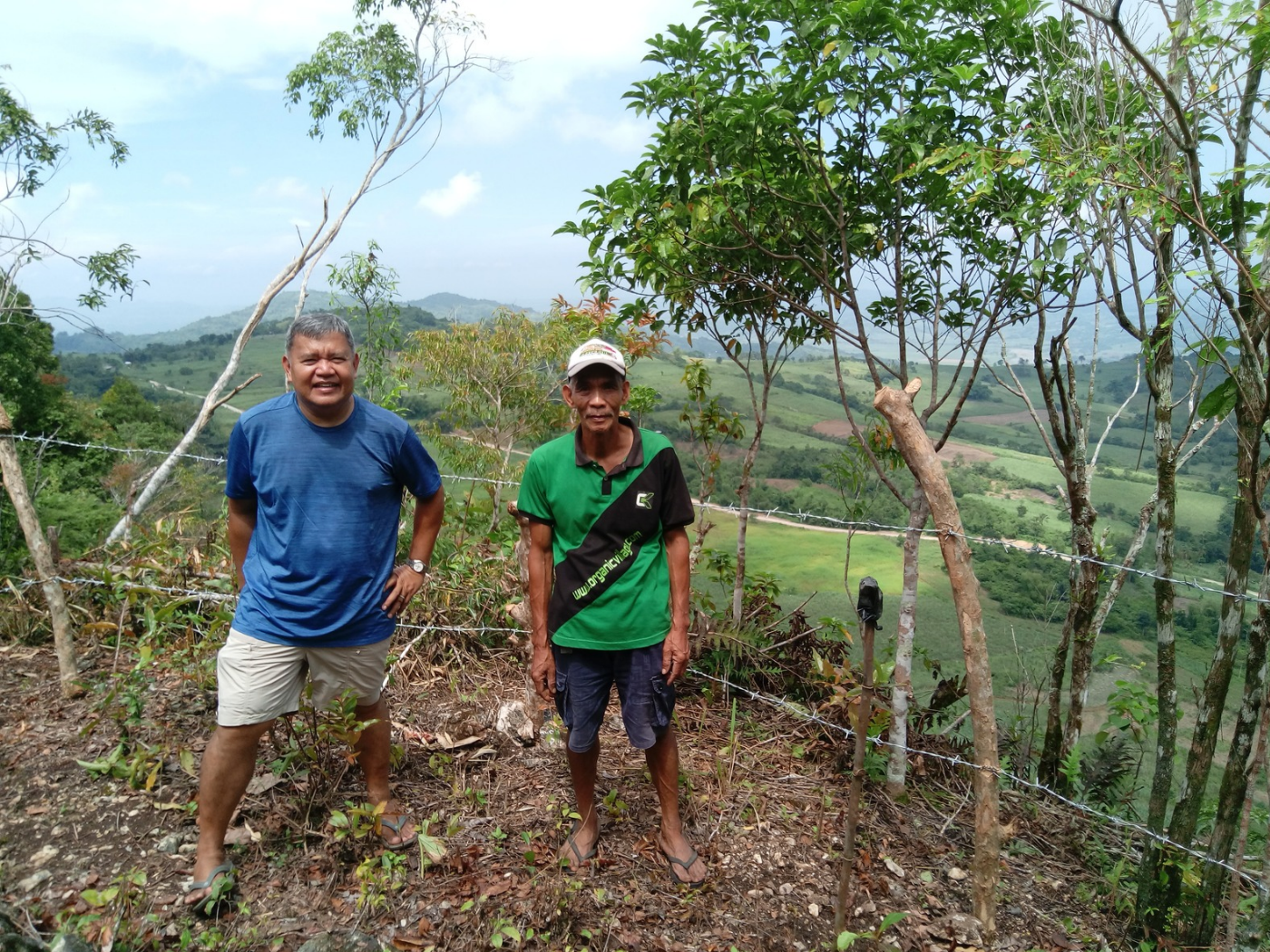
From our vantage point on the ridge, with the newly planted native sapling waving proudly by my side, we could look down on the groves and fields given over to the production of rice, corn, peanuts, beans, vegetables, coffee and bananas. “It’s not just about planting trees”, John pointed out, as we slipped and slithered our way down the hillside towards the newly extended farmhouse and a refreshing pint or two of coconut juice. “It’s an integrated project. We’re trying to save the land and the livelihoods of the people at the same time.”
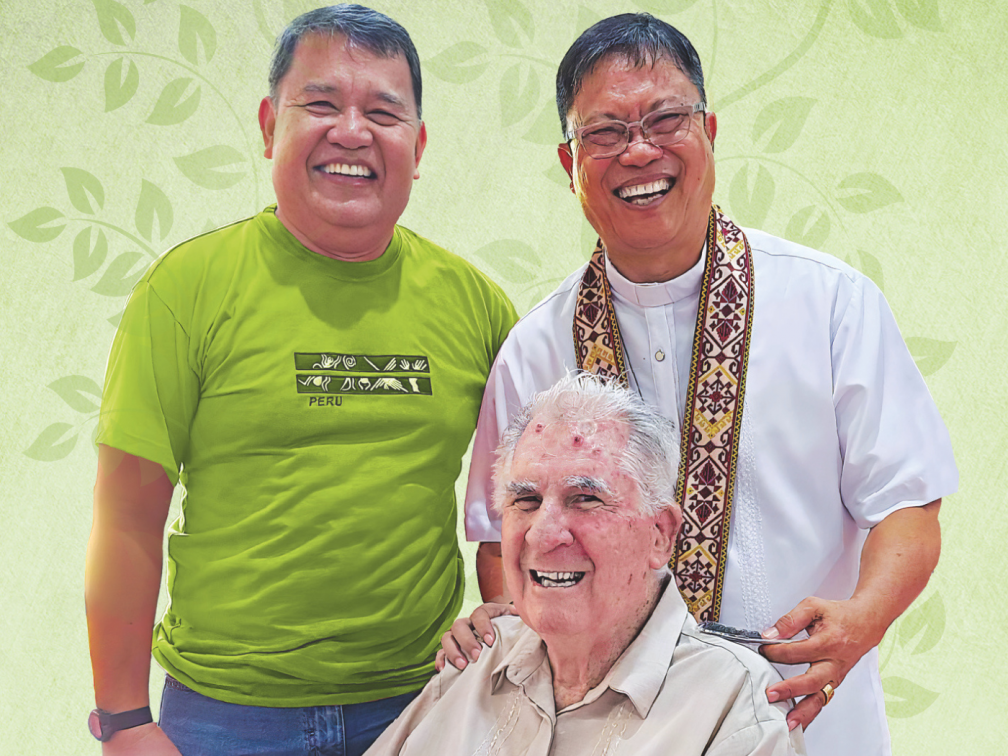
One product NOT grown is sugar. This might come as a surprise, for if Negros is famous for one thing it is as a massive producer of sugar. In colonial times, first under the Spanish and later the U.S., the whole island was given over to the cultivation and processing of sugar cane. The mansions of the former ‘sugar barons’ still dot the territory. Unfortunately, the profits of the sugar trade were based on the exploitation and reduction to near slavery of the native workforce. In the 1980’s, Columbans such as Brian Gore championed the rights of the sugar workers. For his pains, Brian, fellow Columban Fr. Niall O’Brien from Ireland and seven Filipinos were thrown into prison on trumped-up charges and languished there for 14 months. The case of the “Negros Nine” made headlines around the world. International pressure helped gain their release, an episode which arguably hastened the collapse of the Marcos dictatorship in 1986.
“Brian would turn in his grave if he thought we were growing sugar”, remarked John. “But it’s not just ‘the Negros Nine’ affair that put him against it. He felt it was economic suicide to concentrate everything on one single product. Any downturn in the price of sugar on the international markets can ruin the economy and throw thousands into poverty. In any case, growing sugar cane continually is really bad for the soil. That’s why he wanted the ‘santuario’ to push diversification…..but with no sugar !”
Brian had further plans. In 2011 he invited neighbours to form a weaving cooperative. Today, fifteen men and women are engaged in the enterprise. I spent a fascinating half-hour, mesmerized as I watched weaver Rubi ‘click-clacketing” away on her loom at the speed of light. (“Although”, mentioned John, disturbing my reverie, “the men are even quicker!”)
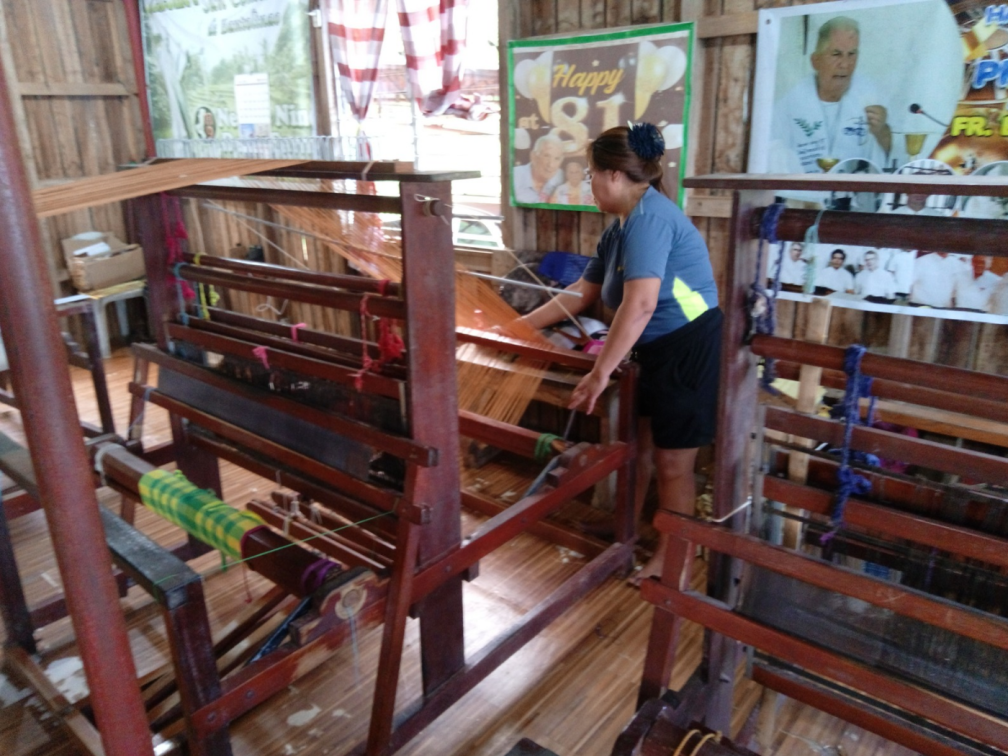
He also confided how one of the weavers is a survivor of human trafficking. This is another tragedy left by the sugar business. “Labourers are paid low wages, they run up debts with the landowners, they’re forced to work off the debt….which sometimes they just can’t do. It’s all illegal, but it still goes on. They’re trapped, unless someone rescues them.” In this case, the ‘Santuario de San Columbano’.
John and his colleagues are thinking big. They don’t want to simply maintain the ‘eco-project’ area, but to expand it. Under an agreement with the government, they are joining their 12 has. with an adjoining 50 has. of protected land and are looking to form partnerships with like-minded organizations so as to manage a much greater extent of restored native forest.
It’s wonderful to dream, but even more wonderful when you see with your own eyes such dreams coming true. Certainly, in this case, here in Negros, from Brian Gore and his colleagues to John Din and a new generation of Columbans and Columban friends, the dream lives on.
