
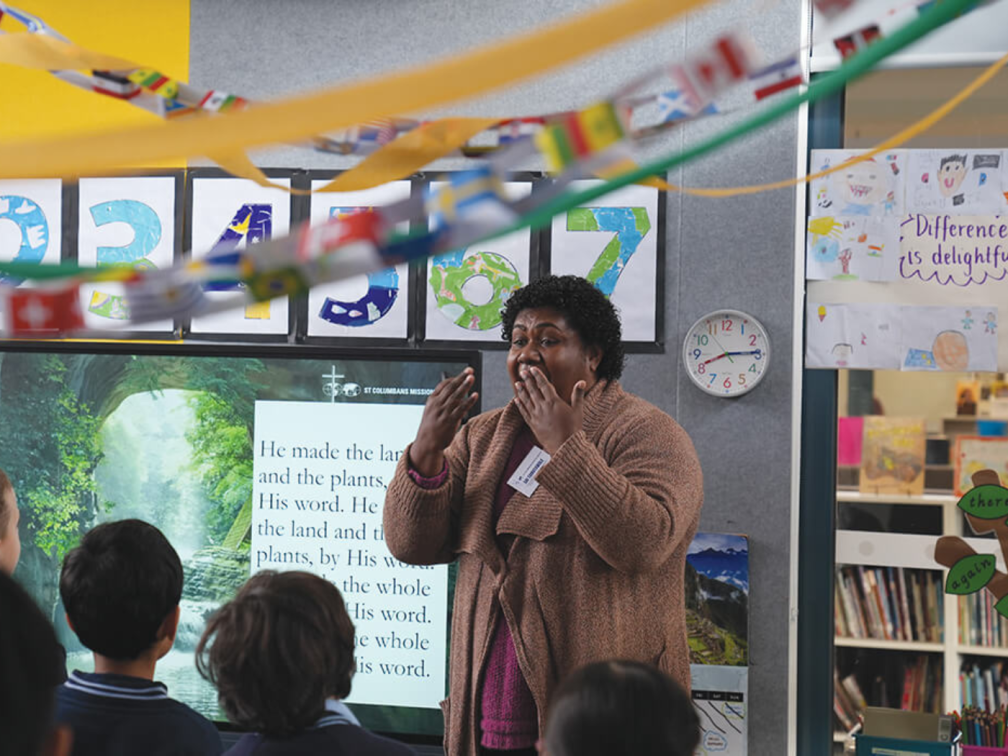
This day was truly memorable for me because it was the first time I’d facilitated a session with students entirely on my own – and in English.
I’d practised a lot beforehand, repeating words and working on pronunciation, twisting my tongue to avoid slipping into Spanish or Tagalog. I stayed fully focused on speaking English with the children. I knew I wasn’t a perfect facilitator but felt relieved that I had taken the initiative to lead with confidence and passion. I led the session, but I was not alone. Columban co-workers Ajesh Abraham and Jacqui Russell were there as part of our team. The teachers welcomed us warmly and with great hospitality. We worked with Grades 1 and 2 on the topic “Caring for Our Common Home”, adapting the session to suit the children’s learning level. Jacqui helped the students with the Creation Song.
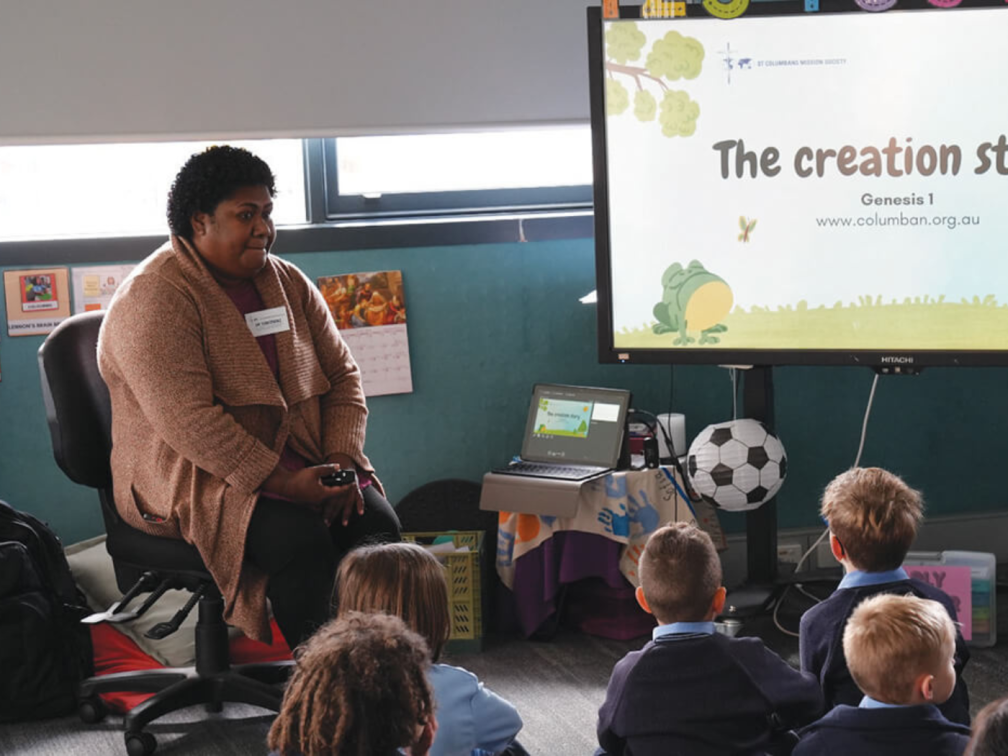
We started by exploring the creation story in Genesis Chapter 1 and then watched the Laudato Si’ video together. The video is a simple, engaging retelling of the Genesis creation story, which highlights the reality of environmental degradation and the importance of ecological responsibility.
Pope Francis’s message to us is about caring for God’s creation in our common home. The video helped the children understand that the destruction of our common home is real. Teaching them at this young age helps build awareness of climate change and encourages them to care for creation.
Then we guided the children on a walk outside, where we encouraged them to observe, touch and appreciate elements of nature within their school environment.
The class ended with class promises. In this activity, students made collective promises on how they would care for our common home. We wrote the promises on large sheets of paper with the Columban logo and gave them to their teachers to display in their classrooms as a reminder. These promises were important. They weren’t just about learning but about committing to action.
The children’s engagement and enthusiasm in the activity were inspiring. They shared thoughtful and creative ideas that we were sure they would take home to their families. Sessions like this are essential because the small actions children undertake to care for our common home can inspire them to guide and teach others. Children remember what they learn and they often correct or encourage their peers when they see something wrong.
This partnership program strengthens our relationship with schools and supports mission education and ecological awareness. It is a meaningful way to plant seeds of responsibility, compassion and stewardship in the hearts of young learners.
This program was also delivered at Good Samaritan Primary School in Roxburgh Park prior to St Mark’s. Students and teachers shared similarly positive feedback, highlighting the engaging activities and the program’s ability to inspire a deeper understanding of care for our common home.
