“We’ll go to mass first and be back just after 7am, then set off to the mountain to meet with the Higaonon community”.
These, as it turned out, rather optimistic words, were part of the plan Marjorie Engcoy, Columban Justice, Peace and Integrity of Creation animator in Mindanao, in the south of the Philippines, gave me for the day’s adventures.
As the sun rose, we arrived early for the 6am Sunday Mass at Our Mother of Perpetual Help parish in Barra, only to discover that this was no ordinary Sunday. It was the Feast of the Santo Niño (the child Jesus), a celebration only in the Philippines. Even with 10 minutes to spare the church was overflowing, with rows of seats added outside the building and the longest procession of altar servers I’ve ever seen spilling out across the road.
The feast marks the birth of Christianity in the Philippines in the 15th century and is celebrated in style with dancing, music and processions as well as prayer and reflection on the call to be humbly dependent on our loving God.
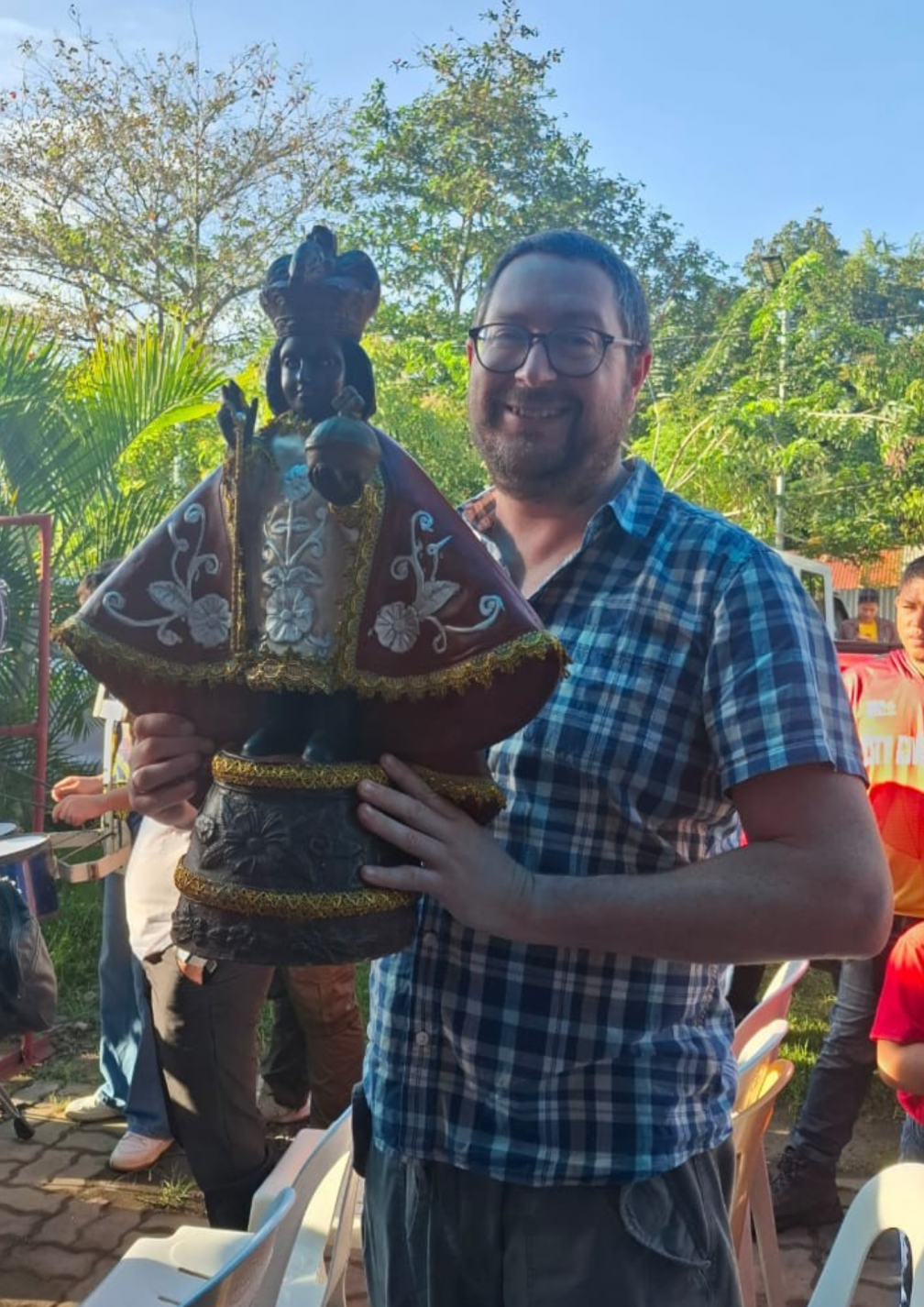
Looking around the church, it dawned on me that there appeared to be more faces than people – every other member of the congregation was holding a statue of the Santo Niño, and some people had more than one. They ranged from the size of a hand to large child-sized figures, and were dressed in a variety of costumes, from traditional Spanish royal clothing to a ‘boy band’-style hoodie. And to add further confusion, one mother had dressed her baby as a traditional statue!
Unsurprisingly the Mass lasted significantly longer than an hour – what a feast of music, youth participation, dance and colour. I was exhausted just watching Peruvian Columban Fr. Enrique as he made his way through the crowds to bless all the statues. Sharing breakfast with him afterwards – during which a donation of a whole spit roasted pig appeared – he mentioned that this was his first of 4 masses that day. Quite a feat!
For us, though, it was time to move on. We were running late for our visit to the Higaonon people, an indigenous community living in the mountains above the city. But first we needed wait for the procession of the Santo Niño to pass by so Bernie, the local Mission Promotion Animator, could rescue the car, and then grab a chicken… a live chicken. Into the boot of the car it went, and we set off.
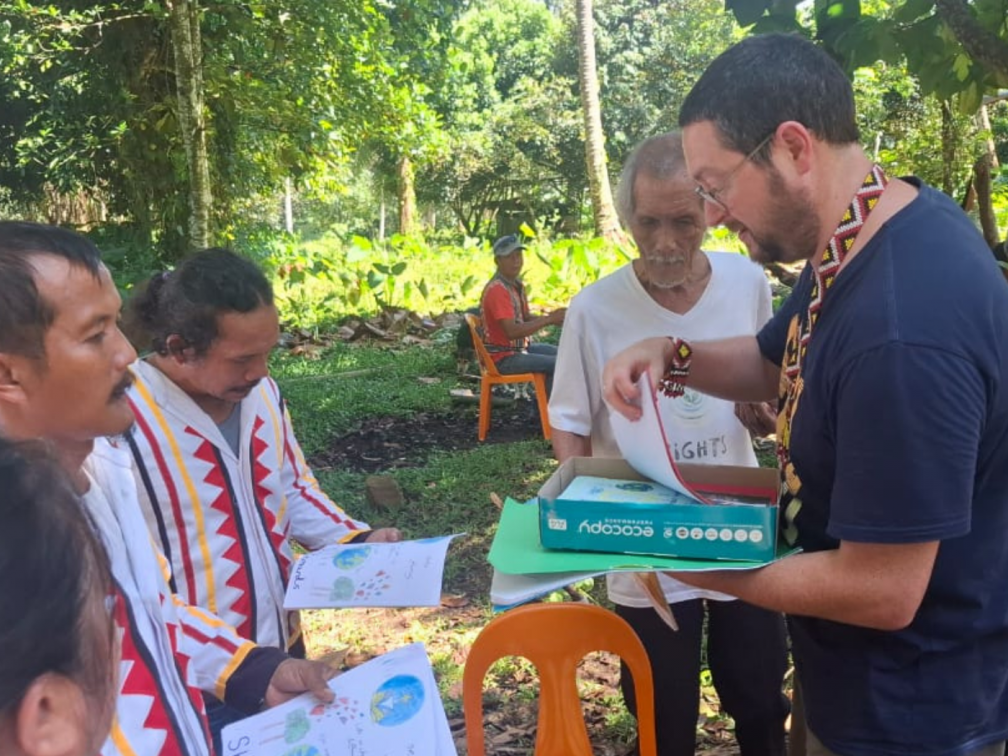
The Columban’s relationship with the Higaonon is a fruit of the Inter Religious Dialogue work of Irish Columban Fr. Paul Glynn. Following interfaith conversations after a typhoon, a dream of shared action was born: growing native trees together. The project is now coordinated by Marjorie, and thanks to her support nearly 30 schools in Britain are now engaged in a five-year solidarity education programme. Through it, students learn about climate change and biodiversity crisis in the Philippines, indigenous peoples and the call in Catholic Social Teaching to care for creation. This visit was my opportunity to learn from the people involved.
But why the chicken? It so happened that the day of my visit, as well as being the Feast of the Child Jesus, was also a special one for the Higaonon – a day marked by a ritual, ‘Panahod’, praying for good health and safety. And this involved the sacrifice and sharing of a number of chickens.
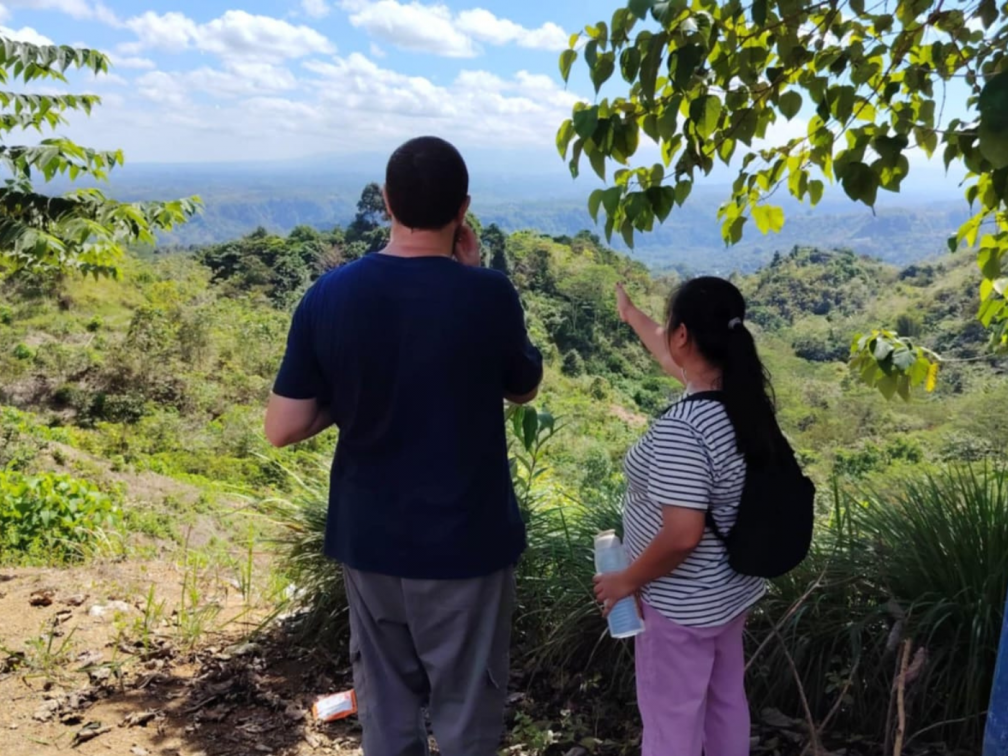
Walking around the reforestation area was a beautiful experience. Seeing the lauaan trees planted over the last 8 years growing strongly, creating wonderful new habitats, was both humbling and encouraging in the face of so much terrible news about the interlinking environmental crises.
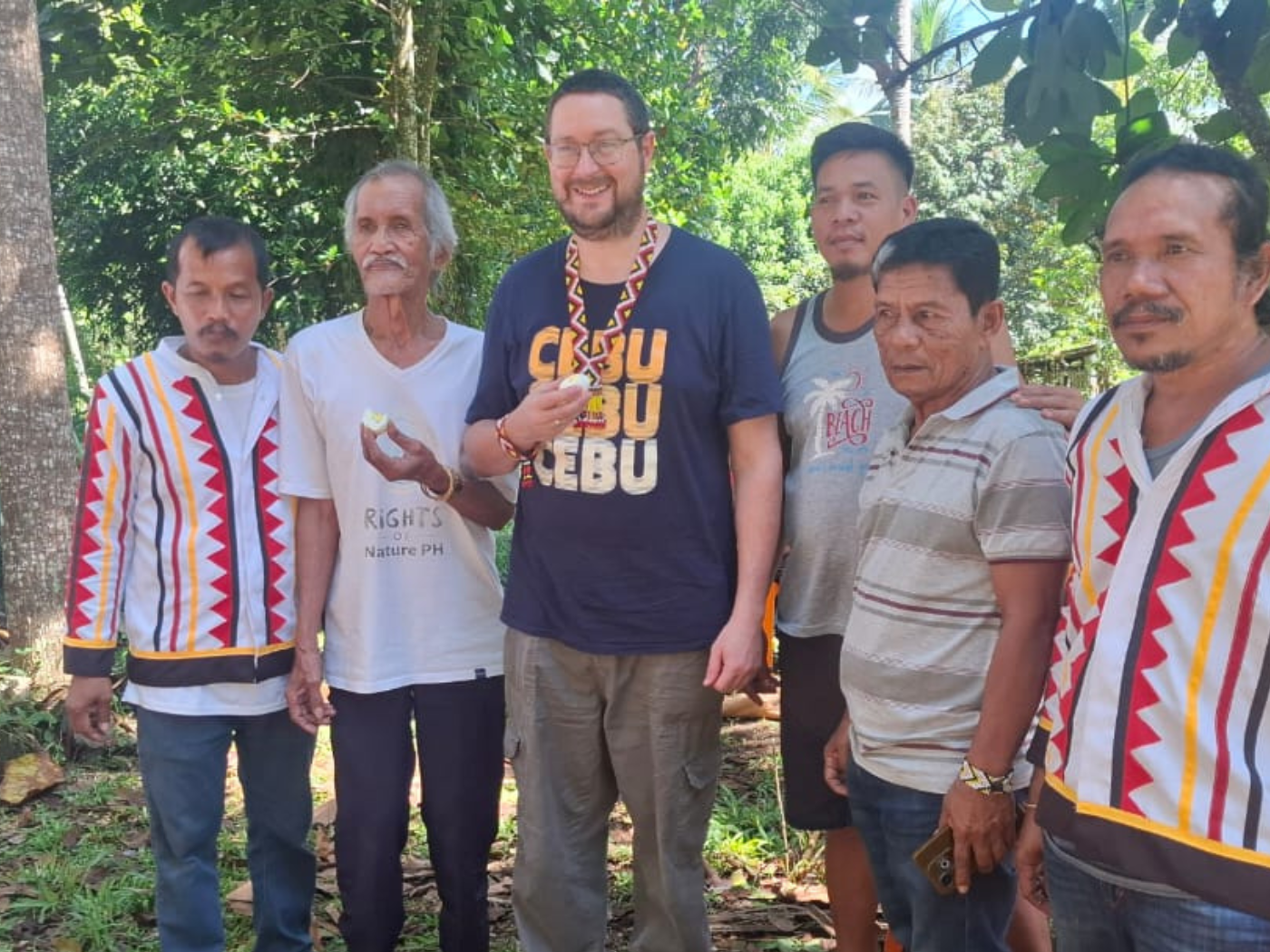
After enjoying a meal together, it was time for chika-chika: conversation with Datus (chiefs) Ontong and Hapitan, and tree growing volunteers Roy, Jimmy, Joebert and Nap. The sharing was illuminating. Their reflections were striking. Speaking about the recent discovery of corruption in the Philippines made apparent following terrible flooding, they suggested that nature has its own way of exposing the truth. They explained how they have seen the changes in the land, in nature around them – they are on the front line of climate change. They spoke about advocating for the rights of nature in the face of the throwaway culture, extractive industries and corruption. Having recently refreshed my memories of Laudato Si’ and Laudate Deum during a conference led by Filipino Columban Lay Missionaries John Din and Arlenne Villahermosa, I was struck by the resonance – particularly the call to hear and respond to the “cry of the earth”.
What a day! Two ‘once-in-life-time’ experiences in one day. Faith and action, celebration and challenge.
But how to make sense of it all? When Christianity came to the Philippines in the 15th century the Higaonon left their homes by the sea and retreated to the mountains. Now, centuries later, recent church teaching and the signs of the times are challenging us to change our relationship with creation, learning again what they have long known – no longer seeing ‘natural resources’ but an interconnected web of life that gives glory to the Creator God. The Child Jesus invites us to humility, to stand in wonder and awe, perhaps no longer as stewards but as gardeners, playing our part in revealing and revelling in the Kingdom of God.