In 2020, I became a Laudato Si’ Animator, a journey that prompted me to re-examine the painful reality of my own family’s history in the Philippines. In 2001, a flood-control project initiated by our local government altered the course of a river, devastating our agricultural land. What had once been a fertile source of livelihood for generations was buried under layers of sand, leaving my family powerless and resigned to our fate. At the time, we did not question what had happened, we simply endured. But as my understanding of the ecological crisis deepened, I saw our personal loss reflected in a much larger, global reality: human actions, driven by neglect, greed, and short-term interests, were inflicting irreversible damage on the Earth, uprooting lives, and severing people from their ancestral lands. This realisation ignited in me a renewed sense of mission.
In 2022, upon my return to Myanmar after the Covid pandemic, the Archbishop of Mandalay invited religious groups to collaborate in response to the urgent needs of the vulnerable and homeless families who had fled their villages due to the ongoing conflict led by armed groups. Our missionary community responded to this urgent call. These families had lost everything. With their homes burned to the ground and their livelihoods destroyed, they faced an uncertain future. When health care systems collapsed, patients had no access to proper treatment. Schools in the conflicted areas were burnt down and universities and colleges were closed. Young people lost their future. Many have gone abroad.
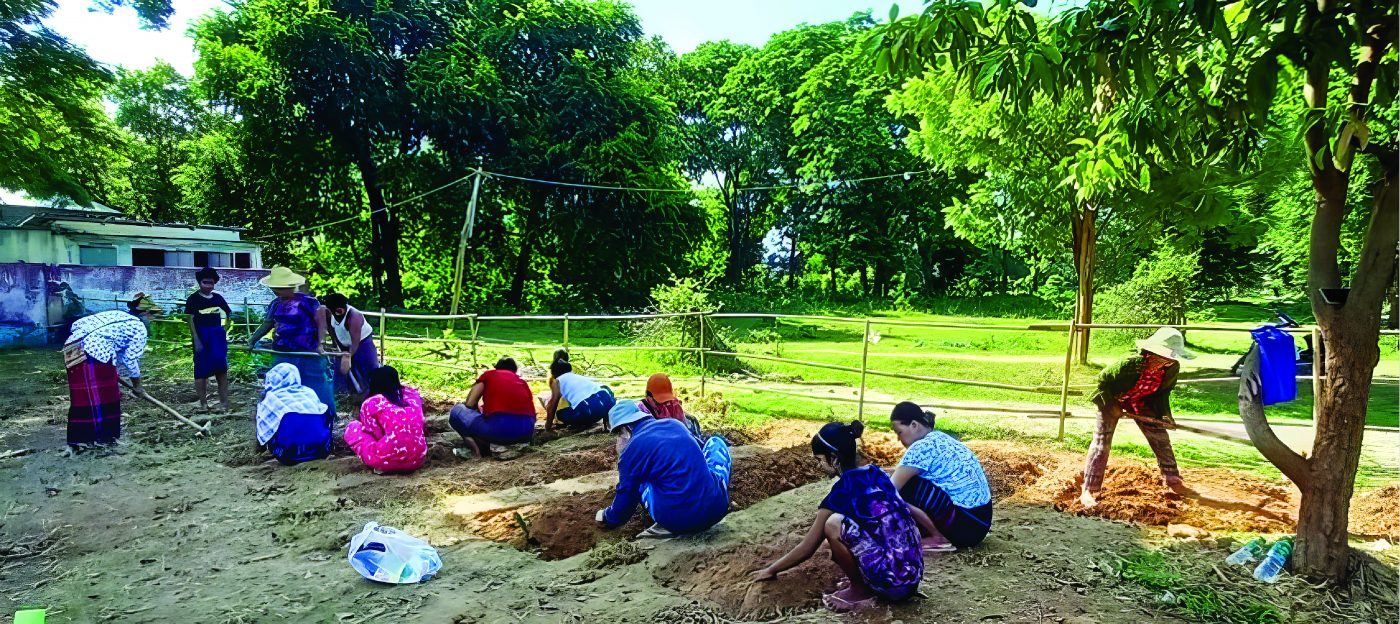
As I listened to their stories, I recognised echoes of my own family’s suffering in the Philippines. We shared a deep, painful bond: the experience of being uprooted, of losing the land that had sustained us. In this moment of profound connection, I felt called to act, not only by providing comfort but by empowering these families with knowledge and hope. I introduced them to Laudato Si’ and the idea of cultivating organic gardens – a tangible way to reclaim life from loss, to heal both the land and the soul.
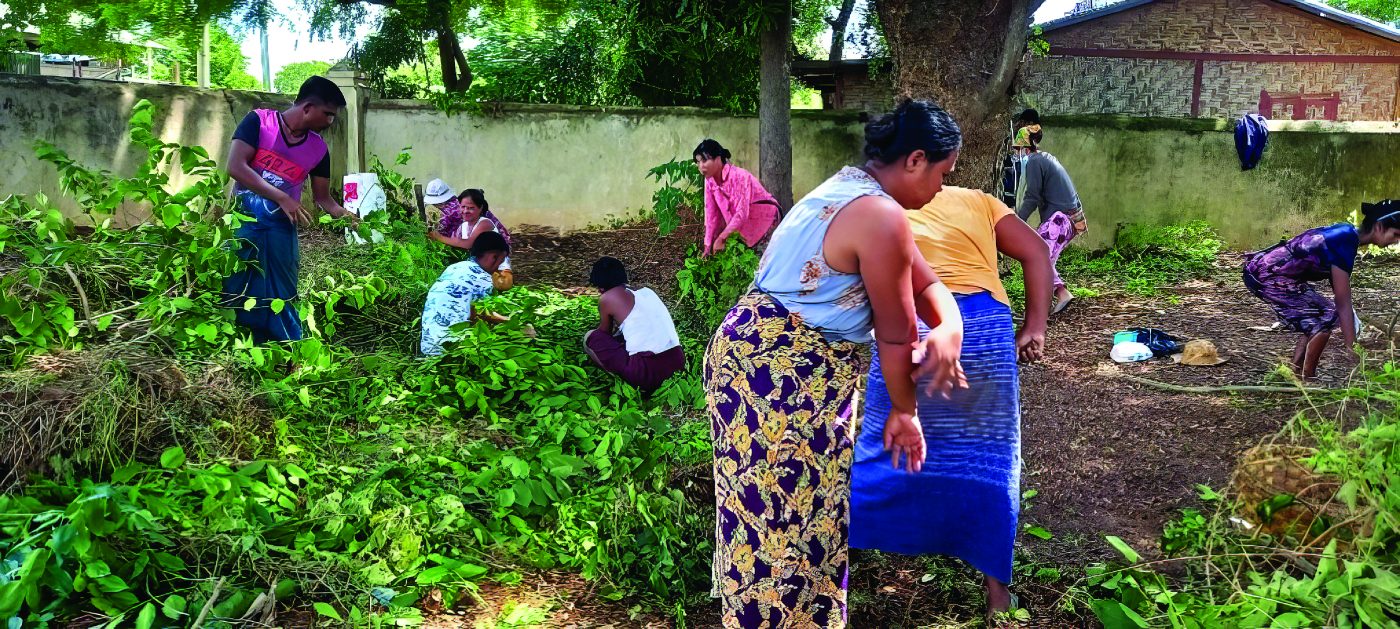
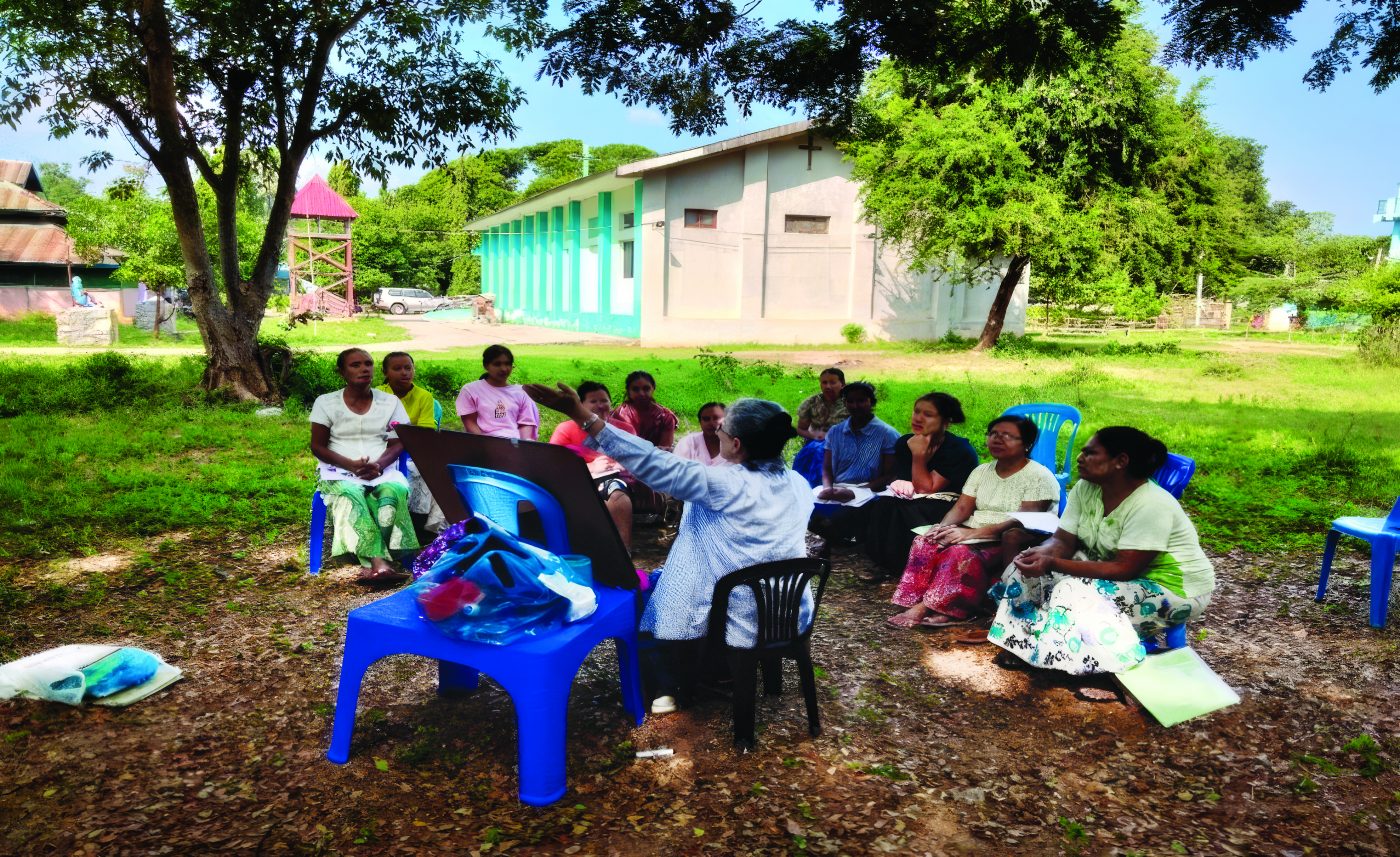
At that time, the parish, with limited resources, could only provide midday meals for about 600 people, but by nurturing the soil, we could take steps towards food security, sustainability, and dignity. Our first initiatives led us to expand into Integral Ecology – guiding and teaching parents and their children on caring for the environment in every way possible. Once a week we hold faith-sharing among the Eco ministry core group, where the mothers usually share their lived reality of having to leave their villages and be separated from their sons who are living in the forests, fighting for the restoration of the country’s democracy.
Last year we completed three years of cultivating organic vegetables. The produce from our organic gardens is shared in the common kitchen to be consumed by all the families. Altogether, we now have five different organic gardens and a small livelihood project within the compound of the Marian Shrine. The support we receive from our bishop and the parish priest encourages us to continue.
As we journeyed together, something extraordinary began to unfold. Beyond the struggles of displacement, we were building something new – a resilient community bound not just by suffering, but by solidarity, faith, and the determination to rise again. I saw new needs emerging: the need for companionship in grief, for safe spaces to share pain, for healing and spiritual renewal. In response, we created a faith-sharing group, where people could express their sorrow, pray together, and find strength in their collective faith. Over time, these moments of worship became sacred rituals woven into the fabric of our celebrations during the Season of Creation, Christmas, and New Year.
Through this journey, I have come to a profound realisation: we are deeply interconnected – not just with one another, but with all of creation. Our wounds, both personal and ecological, are reflections of a greater imbalance, a fractured relationship with the Earth and with each other. Healing must happen on every level. As we work to restore the land, we must also mend the wounded human relationships caused by conflict, displacement, and injustice. Only when we realign our lives with God’s vision for creation – rooted in love, justice, and stewardship – can we truly reflect the beauty and grandeur of our Creator. With unwavering faith, we press on, believing that even in the darkest moments, God’s grace sustains us. We are co-pilgrims, walking this sacred journey together, committed to healing, renewal, and the restoration of our Common Home.