
Magnificent cypress and umbrella pine trees towered over us as we walked through beautifully sculpted eighteenth century gardens. It was an early evening last October and I was visiting Borgo Laudato Si’, part of the papal residence at Castel Gandolfo, near Rome. A 136-acre eco-project at the site was inaugurated by Pope Leo XIV the previous month. He said caring for God’s creation, “is a demanding but beautiful and fascinating task, which is a primary aspect of the Christian experience.”
Borgo Laudato Si’ puts into action the principles described in Pope Francis’ 2015 Encyclical, ‘Laudato Si’ – On care for our common home.’ It hosts over 3,000 plants belonging to 300 different species. A new vineyard promotes biodiversity, comprising various vine varieties, constituting a wine which symbolises communion in diversity. A solar farm produces clean energy, and courses are offered on Laudato Si’, organic farming, sustainable practices, and ecological leadership training.
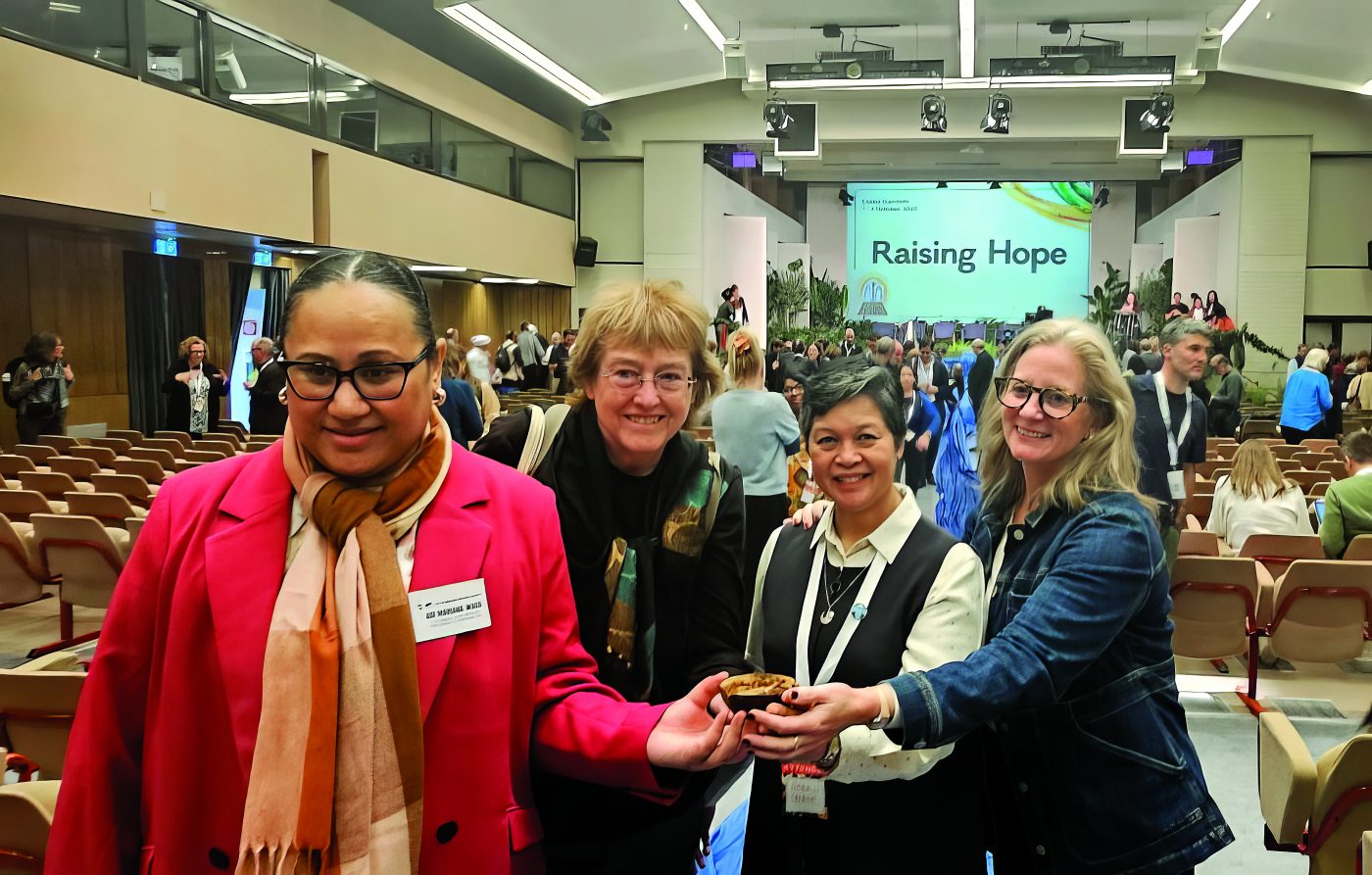
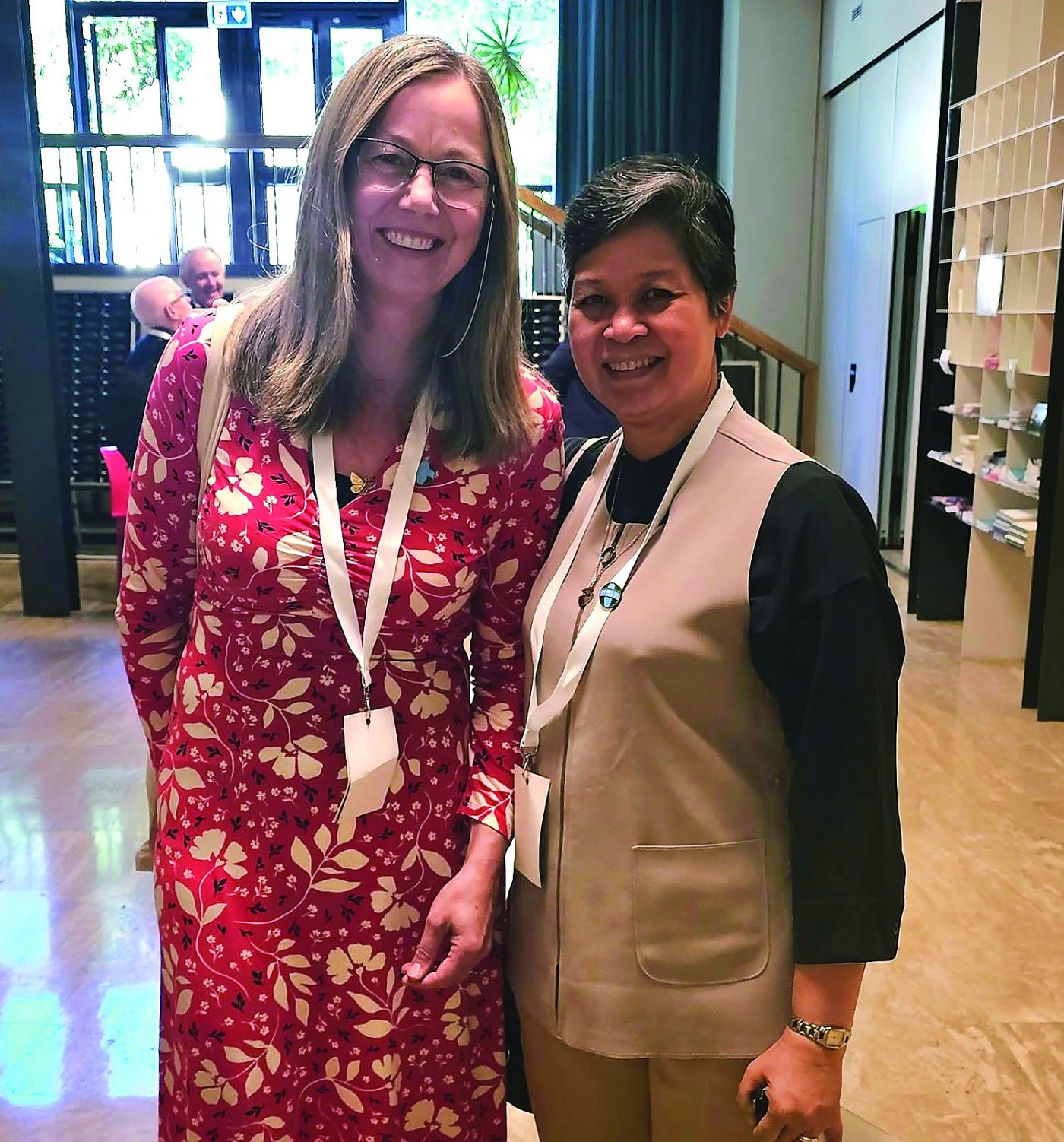
Alongside me were some of around 450 participants from around the world attending the ‘Raising Hope’ three-day conference nearby, organised by the Laudato Si Movement. It celebrated the 10th anniversary of Laudato Si’, focusing on how the Catholic Church might continue responding to Francis’ landmark socio-environmental letter. Other Columban participants were Amy Echeverria, Columban International Coordinator for Justice, Peace and Ecology, based in the US; Adi Mariana Waqa, Columban Partnership Coordinator in Australia; and Sr Anne Carbon, Filipina Congregational Leader of the Missionary Sisters of St. Columban, based in Ireland. I represented the Columban Justice, Peace and Ecology mission in Britain. Protecting and restoring biodiversity is a mission priority of the Columban Fathers and Sisters.
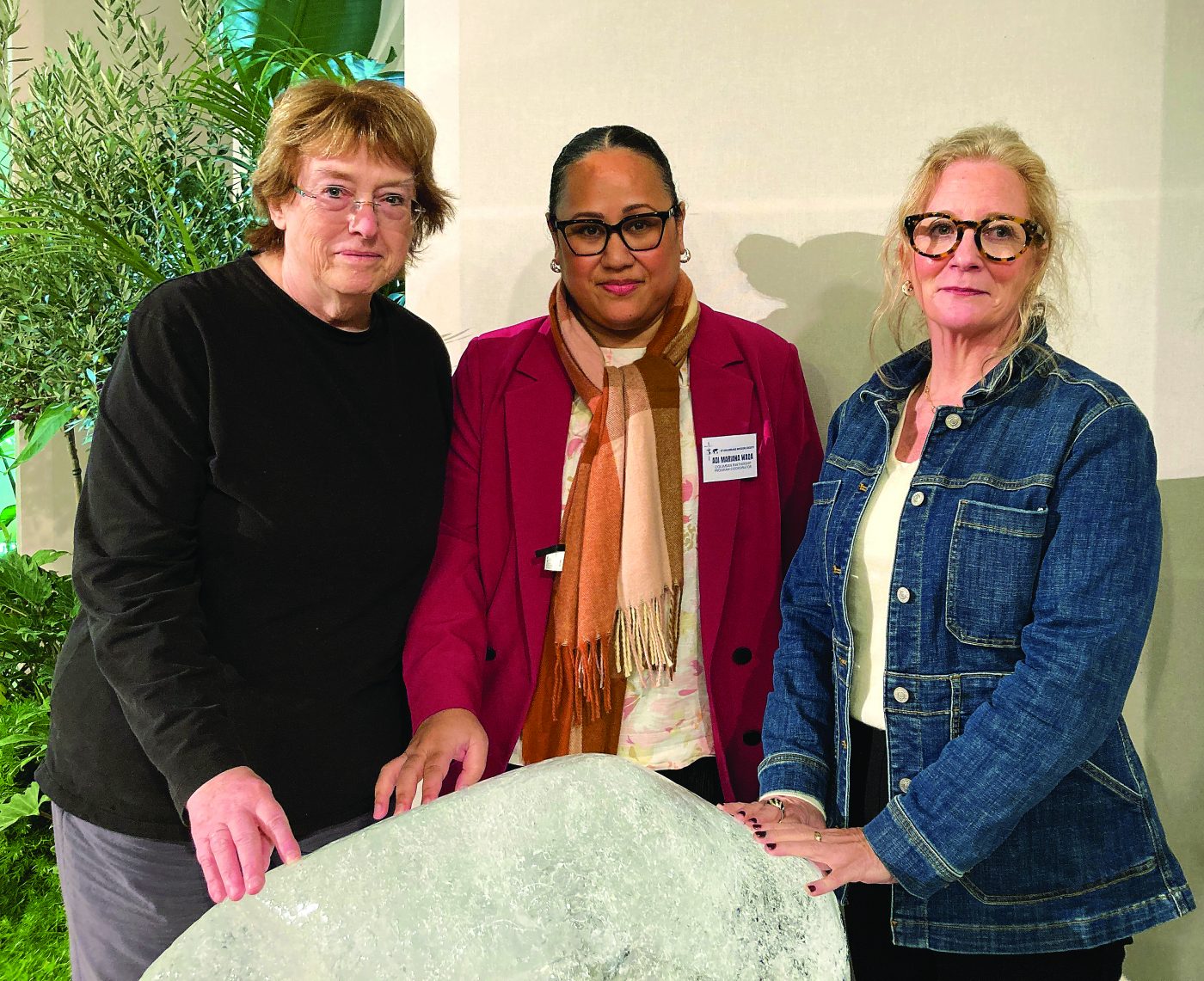
The day before, a beaming Pope Leo joined us at the conference, thanking God for, “the gift we inherited from Pope Francis,” and he warned that the environmental challenges today are greater than 10 years ago. Before him was a block of ice from a Greenland glacier that slowly melted over the conference duration. It represented the “cry of the Earth” and, as Pope Leo blessed it, he asked that the water, “awakes our hearts and cleanses our indifference.”
Pope Leo fully supports the call for “ecological conversion” pioneered by Pope Francis. He asked: “God will ask us if we have cultivated and cared for the world that He created, and if we have taken care of our brothers and sisters. What will be our answer?” Arnold Schwarzenegger – known for his roles in high-profile action films, turned climate champion – was there. We cheered when he suggested, “I’m standing next to an action hero!” Pope Leo turned to us and said, “you are the action heroes.”
What did the Columban team learn at the conference? “The conference was a profound reminder of our shared call to care for creation,” reflected Sr Anne Carbon; “a sacred gathering marked by renewed hope, courageous dialogue, and Gospel-rooted action for our common home.” She found, “meeting global environmental leaders, many of whom I had only encountered online, and speaking with them in person was deeply inspiring.” Sr Anne, who was chosen to meet Pope Leo commented, “these encounters stirred a stronger sense of collective hope and deepened our shared commitment to stand in solidarity with Mother Earth and with all those working for transformative change.”
The conference underlined the link between climate change, biodiversity, water depletion, environmental emergencies, migration, conflict and human development. In his talk Pope Leo stressed, “the impact of our actions on our human brothers and sisters, whilst not shying away from the calling to wider communion with the whole of Creation.” Afterwards, Bishop Gerardo Alimane Alminaza of San Carlos, Chair of the Laudato Si’ Programme of the Catholic Bishops of the Philippines, told me about the Church’s campaign to stop a new fossil fuel extraction project ruining a hot spot of biodiversity, threatening clean water and livelihoods.
How we can better communicate climate change and biodiversity loss was an important conference issue. Amy Echeverria underlined Pope Leo’s call to move from a focus on data on environmental crises to focusing on speaking to people’s hearts and this might spur more people to action. Mariana Waqa suggested we need to highlight people’s lives, cultures and stories, saying, “identities, cultures and traditions are under threat in the Pacific Region.” Originally from Fiji, she was moved by young men of ‘Pacific Artists for Climate Justice,’ singing of a love for God’s creation and showing, “the human heartbeat in countries at the front line of climate change and biodiversity loss.”
Sr Anne felt that, as someone from the Global South, her presence, “helped build bridges of understanding and cooperation between the Global South and North.” Addressing environmental breakdown, “calls for all of us to act together in a spirit of listening, cooperation, and shared responsibility, recognizing our deep interdependence.” And the Church is a powerful player. Yeb Sano, Chair of the Board of the Laudato Si Movement, suggested that, “faith communities have the power and moral compass to campaign for the political will to turn the climate crisis around.”
The Columban team were hugely impressed by the atmosphere of hope at this conference. Lorna Gold, Executive of the Laudato Si Movement, summed it up: “It was a glimpse of a different future where we step out of our excuses, the million reasons to stop and go backwards, and act; we have been gifted this beautiful planet and we wish to live authentically and build God’s kingdom amongst us.”
In Britain and Ireland our annual Columban Schools Competition in 2024 took the theme, ‘Biodiversity Matters,’ and the hundreds of young people told us that biodiversity does matter to them. And young people see the Church as being influential in protecting the diversity of life on Earth. Columban grounds at Solihull (Britain) and Dalgan (Ireland) are being rewilded and we have campaigned to promote stronger legislation to protect the environment.
I returned from the ‘Raising Hope’ conference deeply convinced that Columban mission is part of something greater than ourselves and our immediate partners. I am so proud that the Catholic Church is bringing its resources and wisdom to the shared journey of nurturing God’s creation.