
Before traveling to Conference Of the Parties (COP) 17 in Yerevan, Armenia, I was already wrestling with difficult questions: Is it worth going there at all? What can I contribute? Will my presence with the team really make a difference?
As the meeting unfolded and I engaged with the process, those doubts took a backseat. I found myself introducing to new faces, making new friends and networks, organizing our side event and helping others, participating in various activities, press conferences, and joining as observer in one working group.
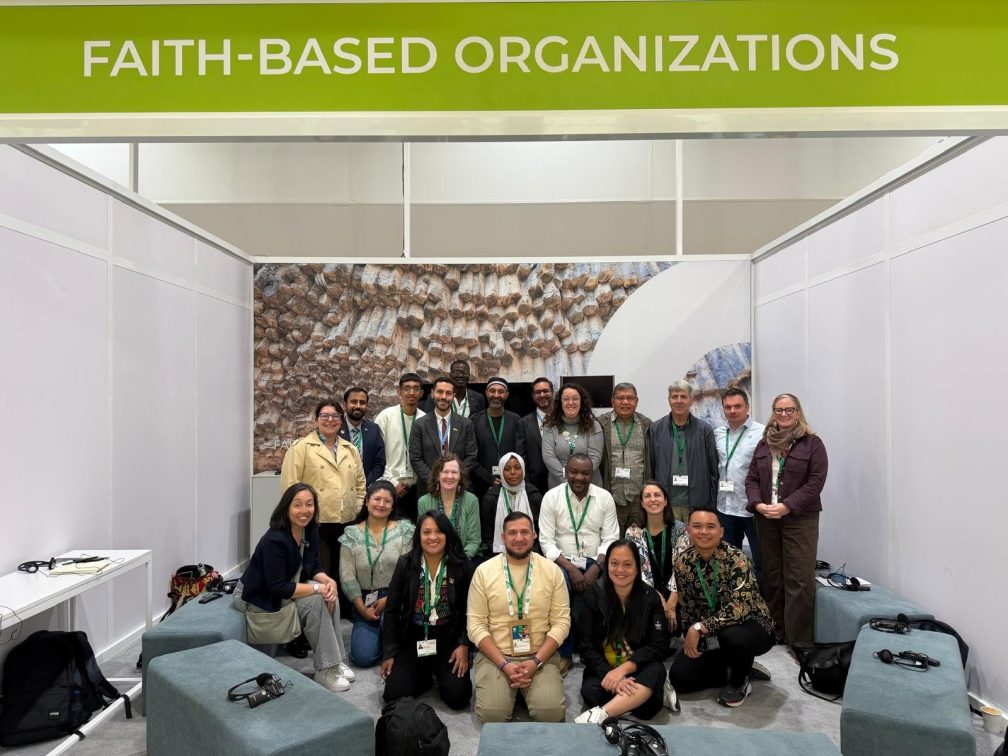
During the conference, I joined representatives from different faith groups to meet with the Executive Secretary of the Convention on Biological Diversity (CBD). For a global meeting first-timer like me, the experience was fruitful, affirming, and deeply inspiring. Thanks to the untiring efforts of numerous faith representatives over previous COPs, faith is slowly re-entering the conversation surrounding biodiversity loss. When asked how she felt about the support of faith groups, the Executive Secretary responded quickly, noting how these groups have brought ethics and spiritual values back into the conversation about conservation, sustainability, and biodiversity protection and restoration.
The Faith for Biodiversity group continued to push for more space and opportunities to bring spiritual values into this extremely complex challenge. One of the specific requests was for an intentional effort by the CBD Secretariat to create a dialogue space between faith and science. This request was warmly accepted, and we look forward to the continuous emergence of the faith dimension in these negotiating spaces—moving from a purely scientific discourse to a faith-inclusive conversation.
Yet, having accompanied the caucus of Indigenous Peoples and Local Communities (IPLC) during the second week of COP 17, one can see that spirituality—their relatedness to the divine—is so intrinsic to their worldview that it is impossible to separate it from their daily lives. It permeates everything: their relationships with each other and with the natural world.
Isolating the faith dimension from daily life results in a compartmentalized spirituality—an inconsistency between professed faith and actual behavior. This is the danger if the model of revival we bring to the COP conversation is a faith devoid of lived reality. Bringing faith back to COP 17 cannot remain an exercise in abstract concepts of values and ethics; like the lives of Indigenous peoples around the world, it must be embodied. Only when the faith dimension is embodied and viewed as part of an interconnected whole can we find genuine possibilities and hope in dealing with the complex realities of biodiversity loss and climate change. When we recognize that biodiversity loss is not an isolated problem, but rather—as Laudato Si’ reminds us—a manifestation of when “A certain way of understanding human life and activity— the dominant technocratic paradigm—has gone awry, to the serious detriment of the world around us” we become more realistic. We see that these problems are deeply interconnected. Consequently, our individual responses are not isolated efforts, but essential chapters in a collective narrative currently under construction.
While history proves that international collective action can resolve complex environmental crises—such as the recovery of the ozone layer—most nation-states still refuse to recognize that only collective action can guarantee our future. Watching party delegates in action, I was often unsure whether they were simply unaware that their narrow national interests were stalling the negotiations altogether.
Civil society organizations (CSO’s), non-governmental organizations (NGO’s), the academe, and faith-based groups constantly surround the negotiating tables where the delegates sit. Silent sighs and bursts of applause fill the room, reflecting the constant advances and backslidings of the text of the negotiation. Today, words and phrases that are desperately needed in our time are considered as “red lights” that influential, industrial and developed countries oppose at all costs. Framework like a rights-based approach, the human rights of environmental defenders, gender-based approaches, and business/corporation disclosure remain highly contentious. Whenever they appear in the draft text, a long and tedious debate inevitably ensues.
Furthermore, some parties refuse to recognize the science of biodiversity loss reported by the Intergovernmental Science-Policy Platform on Biodiversity and Ecosystem Services (IPBES)—the global authority for synthesizing scientific data into actionable policies. By minimizing crucial reports and merely stating they “take note” of them, these parties threaten to drive negotiations by political opinion rather than verifiable facts.
Geopolitical agendas heavily manipulate these negotiations. Large nations relying on extractive economies and territorial expansion frequently reject science-based analyses and treaties—such as the High Seas Treaty, commonly known as the Biodiversity Beyond National Jurisdiction (BBNJ) Agreement—that would otherwise contribute enormously to planetary protection.
Back home, people often ask me if participating in COP 17 was worth it, or if the COP framework is still fit for purpose. Instead of answering directly, I prefer to share what people at home truly need to know: what the observers are actually doing, and why they must remain vigilant.
Biodiversity is not a simple issue; it is a matrix of complex crises. Every day, observers gather in caucuses to share updates from various contact groups and analyze where negotiations are heading. You cannot help but appreciate the dedication of the people who track these minute details to keep the process on course. COP 17 is not for the faint-hearted. It is for courageous people willing to stand against the odds because the dream is worth fighting for.
This courage is paired with immense creativity. I have seen the profound power of silent protests; displaying images of murdered and imprisoned environmental defenders successfully caught the eyes of every delegate in the room.
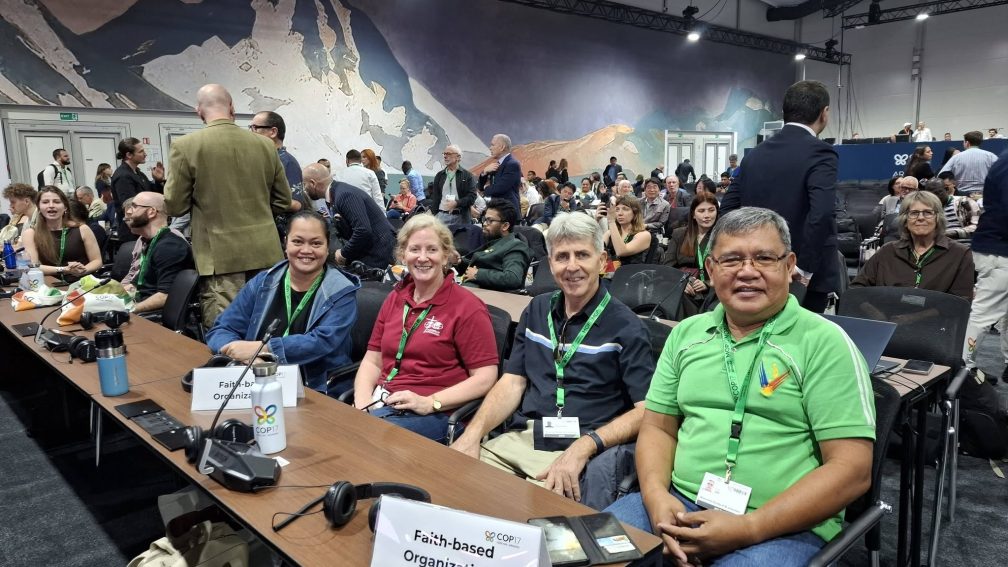
As COP 17 came to a close, the image that stayed with me was that of delegates seated around a massive, U-shaped table, completely encircled by observers—youth, women’s organizations, the academe, CSOs, NGOs, Indigenous peoples, and faith-based organizations. This image perfectly illustrates the watchdog role of civil society. In that room, the observers were silently sending a message to the parties: We cannot intervene in your debates, but we are watching you with eyes that demand transparency, truth-telling, and accountability. And we will watch you through the wee hours of the night and into the dawn of a new day.
Ultimately, this answers my opening question. The appropriate question for a COP participant is not “Is it worth it?” but rather: “How can we use our collective presence to force transparency, accountability and embody the change the world is waiting for?”
