

I remember as a child one evening when the sky seemed to be praying. I was riding in a car with my mother at sunset, and the clouds were washed in violent, orange and pink, the whole horizon alive with color. Without really thinking, I found myself asking, “Where is God?” Years later I realized I already knew the answer: God was in the sunset that had stirred my wonder in the first place. I sometimes think we come to ecological conversion the way we come to vocation—through moments when our hearts are burst open, first in awe and then, as we notice what is being lost, in sorrow. Laudato Si’ gives voice to this experience when Pope Francis says that “the earth… is among the most abandoned and maltreated of our poor” (LS 2). The suffering he names includes the slow unraveling of biodiversity—the intricate communion of species and habitats that makes life possible. The 2022 United Nations Kunming–Montreal Global Biodiversity Framework (often shortened to the “Global Biodiversity Framework” or GBF) is the world’s most important recent attempt to respond.
Each year, the Church’s call to “care for our common home” finds an echo in global moments of attention such as the International Day for Biodiversity (May 22) and World Environment Day (June 5). These observances can help communities pause, learn, pray, and renew commitments that align with the Kunming–Montreal Global Biodiversity Framework’s vision of living in harmony with nature.
What is the Kunming–Montreal Global Biodiversity Framework?
Adopted in December 2022 at the UN Biodiversity Conference (COP15) under the Convention on Biological Diversity, the Kunming–Montreal Global Biodiversity Framework is a shared roadmap for governments and societies. Its aim is straightforward but urgent: halt and reverse biodiversity loss so that nature can recover. The framework sets a 2030 mission (this decade is decisive) and a long-term 2050 vision of “living in harmony with nature.” Practically, it lays out four global goals for 2050 and 23 targets to reach by 2030. Countries are expected to translate these targets into national plans, budgets, and laws, and to report on progress.
Yet for us, a framework like this is not only a policy roadmap; it can become a prompt for contemplation. What if the earth, too, has a vocation—an identity and a call held in God—and what if biodiversity is part of the earth’s way of praising its Creator? Jesus’ life suggests a spirituality of listening: listening to Abba, listening to people, and listening to the land. In a time of ecological woundedness, we may need to recover that same practice, learning again to hear the voices that are often obscured and marginalized—including all created beings and ecosystems.
For Catholics, it may help to receive the GBF as a kind of global examination of conscience—paired with concrete resolutions. It is not a document of prayer, yet it presses a deeply spiritual question: will we learn to relate to creation as gift, or will we keep treating it as something to be used up? The stakes are the common good: clean water, food security, stable climates, and the wondrous diversity of life that reflects the Creator’s generosity. As Laudato Si’ insists, environmental and social questions cannot be separated; “everything is connected” (LS 91, 117, 138). Biodiversity loss is therefore never only “about nature.” It is also about people—especially people living in poverty—whose daily lives are most directly tied to the health of local land and waters.
Key goals and targets—translated into everyday language
- Protect and conserve more of Earth—wisely and fairly (“30 by 30”). One of the best-known targets calls for conserving and effectively managing at least 30% of land, inland waters, and oceans by 2030, especially areas important for biodiversity, through protected areas and other conservation measures. The emphasis is not only on drawing lines on maps, but on good management, ecological connectivity, and equitable governance, including respect for the rights of Indigenous peoples and local communities.
- Restore what has been degraded. The framework calls for large-scale restoration of degraded ecosystems by 2030. This includes forests, wetlands, grasslands, rivers, and coastal habitats—places that act like the planet’s “organs,” filtering water, storing carbon, and providing homes for countless species.
- Reduce drivers of harm: pollution, invasive species, and overexploitation. Targets address reducing risks from pesticides and other highly hazardous chemicals, cutting excess nutrients, tackling plastic and other pollution, and preventing or controlling invasive alien species. Others call for ensuring that harvesting and trade in wild species is legal, safe, and sustainable.
- Reform the economy so it stops rewarding destruction. The GBF calls for reducing incentives and subsidies that harm biodiversity by hundreds of billions of dollars annually, while scaling up positive incentives—essentially, aligning money with care rather than ruin.
- Share benefits and mobilize resources. Because biodiversity supports medicines, crops, and scientific knowledge, the framework emphasizes fair and equitable sharing of benefits from genetic resources, and the need to increase financing and capacity so countries can actually implement the plan.
Why this matters to Catholics: creation, conversion, and integral ecology
Laudato Si’ frames the ecological crisis as spiritual and relational: a rupture in our relationship with God, neighbor, and the earth. Pope Francis warns against treating creation as “a mere setting in which we live” (LS 139). In that light, the GBF—though written in diplomatic language—can be read as a call back to relationship. It reminds us that human flourishing depends on living within limits, honoring the integrity of ecosystems, and making decisions that respect life beyond our immediate convenience. It also invites us to practice a spirituality of listening, so that we are formed not only by what is efficient or profitable, but by what is living, vulnerable, and beloved.
This connection becomes clearer when we remember who suffers first when nature is damaged. A degraded fishery harms coastal families; a drained wetland worsens floods; the loss of pollinators threatens small farms and food prices. Pope Francis calls us to hear both “the cry of the earth and the cry of the poor” (LS 49). Biodiversity protection is therefore not a “luxury issue” for wealthy societies. It is part of defending human dignity and advancing peace—because communities are forced to compete for scarce water, fertile soil, or stable livelihoods are more vulnerable to conflict and displacement. In fact, our commitment to care for the earth is intimately linked to another mission priority; care for people who are on the move like migrants, refugees, asylum seekers, victims of trafficking and internally displaced.
The GBF also resonates with Laudato Si’’s call to ecological conversion: not a momentary feeling, but a turning of the heart that slowly reshapes habits, expectations, and structures until our love becomes practical. Protecting 30% of Earth is not only a technical project; it asks for prudence (choosing what truly sustains life), justice (ensuring conservation does not dispossess the vulnerable), and temperance (refusing the culture of waste). Likewise, restoring degraded lands can be a visible work of repentance and repair—an echo of the biblical promise that God “makes all things new” (cf. Rev 21:5) and a reminder that the Lord invites us to cooperate with that renewal, patiently and faithfully.
How are Columban Missionaries involved?
For more than fifty years, we Columban Missionaries have lived our missionary vocation through Justice, Peace, and the Integrity of Creation—often expressed today as Peace, Ecology, and Justice. Our approach is deeply connected with a spirituality of listening: listening to God in prayer, listening to communities—especially those whose voices are obscured and marginalized—and listening to the land and waters that sustain daily life. In 2024 we named biodiversity protection and restoration as one of our mission priorities, explicitly rooting this work in the call to ecological conversion in Laudato Si’. Our creation care is therefore not only “hands-on” (planting, restoring, educating), but also pastoral and prophetic: accompanying those on the margins, forming consciences, and naming the structures that turn living lands and waters into commodities.
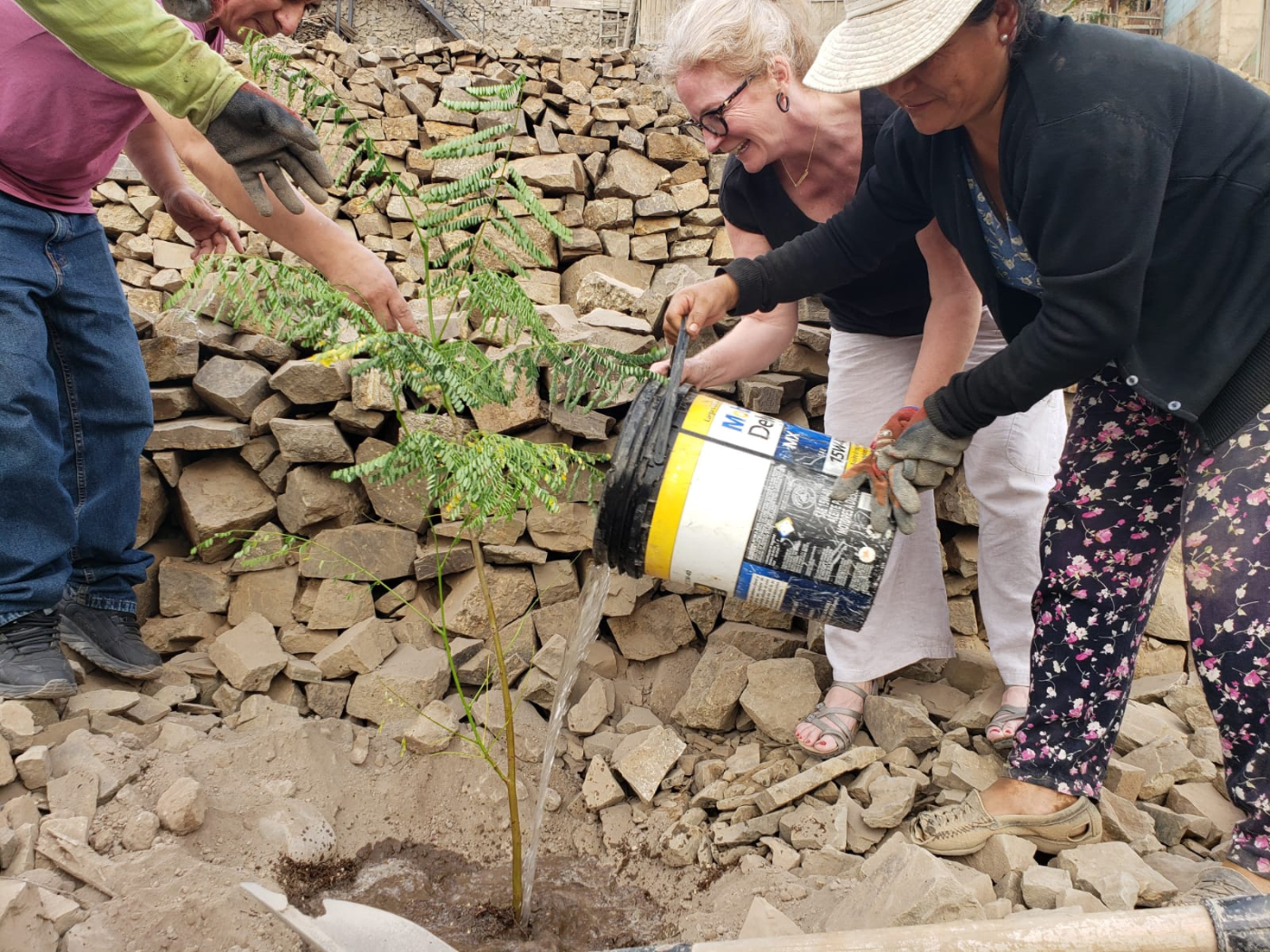
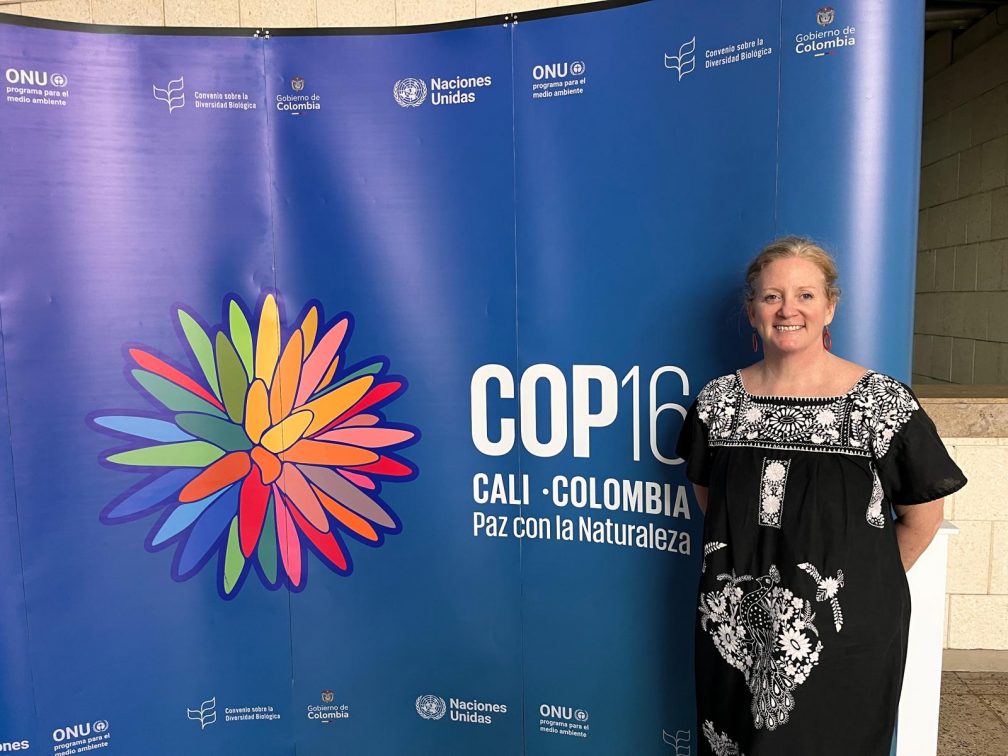
We also engage the global biodiversity process directly. We have participated in UN biodiversity summits (Conference of Parties, COP) including COP15 (2022), COP16 (2024) and upcoming COP17 (October 2026) joining wider faith networks to witness—quietly but clearly—that we want real accountability for the commitments nations made under the Kunming–Montreal Global Biodiversity Framework, including how national biodiversity plans are renewed to match its goals and targets. At the same time, we offer formation that helps communities pray our way into action: biodiversity reflections, educational materials, and resources such as the Jubilee for the Earth biodiversity podcast1972 and study guide. And we connect local action, particularly with Youth and Indigenous Peoples, to global solidarity through projects like reforestation and habitat restoration with frontline communities, alongside simpler signs of hope such as tree planting and “rewilding” initiatives on Columban grounds—places where we can encounter again the gentle truth that creation is not background scenery, but a living chorus of praise, with many other-than-human voices.
What can a parish or household do?
One simple way to begin is to anchor local action in the calendar: use International Day for Biodiversity (May 22) and World Environment Day (June 5) as annual touchpoints for a homily focus, adult formation night, school activity, or a parish service project (e.g., native planting, habitat cleanup, or pesticide reduction).
- Pray and teach with creation in view. Preach and catechize using Scripture’s praise of creation; celebrate the Season of Creation; include petitions for endangered species, threatened habitats, and those harmed by ecological degradation.
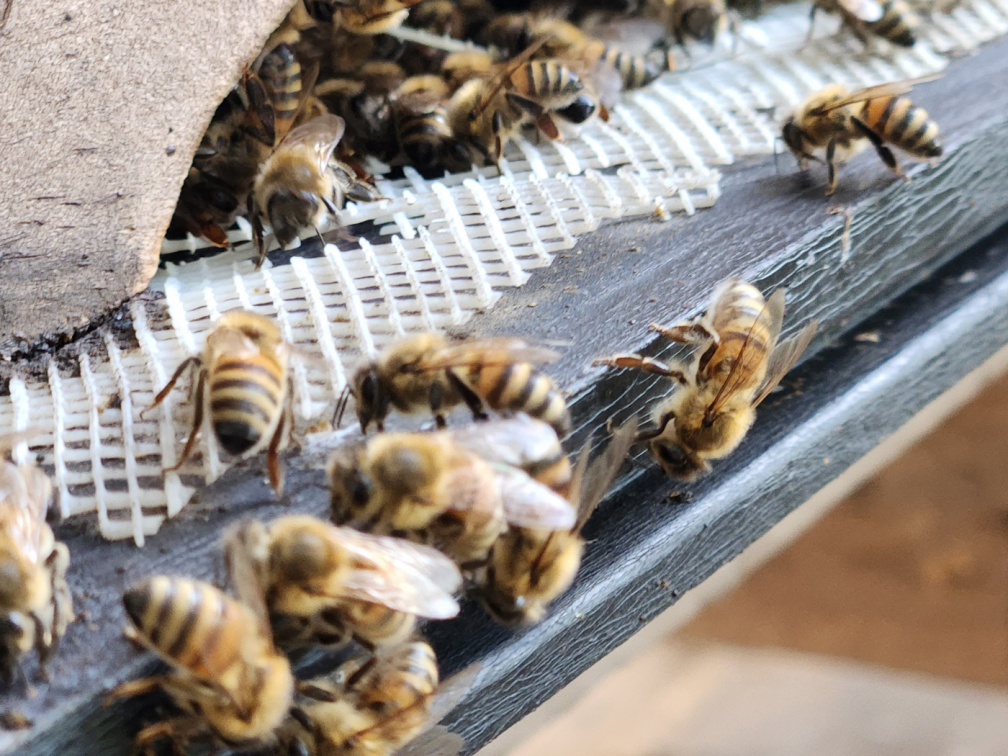
- Make church grounds a small refuge. Plant native species, reduce pesticides, add pollinator gardens, protect trees, and manage stormwater with rain gardens—small steps that directly support local biodiversity.
- Choose biodiversity-friendly food and purchases. Reduce food waste, eat lower on the food chain more often, seek sustainably sourced seafood, and favor products that avoid deforestation and habitat destruction.
- Support policies that protect the vulnerable and the land. Learn what conservation and restoration plans exist locally; advocate for clean waterways, habitat connectivity, and equitable conservation that respects community rights.
- Join broader efforts. Partner with local conservation groups, Catholic charities, and diocesan creation-care initiatives; consider participating in the Laudato Si’ Movement and Laudato Si’ Action Platform to set goals and track progress. If you’re looking for Catholic formation resources on biodiversity, you can also draw on resources we produce as Columbans (Justice, Peace, and Integrity of Creation materials, study guides, and reflections) to help our communities move from prayer to action.
A hope worth sharing
The Kunming–Montreal Global Biodiversity Framework is, at its heart, a confession that business as usual is failing the living world—and a promise that it does not have to be this way. For Catholics, it can be received as one more invitation to love God by caring for what God loves. Laudato Si’ reminds us that we are not faced with “two separate crises, one environmental and the other social,” but “one complex crisis” (LS 139). The GBF offers practical signposts for meeting that crisis with honesty and hope: protect, restore, reduce harm, reform incentives, and share responsibilities fairly.
If we want future generations to inherit more than a memory of abundant life, this decade matters. The work will involve governments and scientists, farmers and fishers—but also parishes, schools, and families learning again to live gratefully within creation. We can begin where we are, with attention and with small faithfulness: blessing the soil, noticing the creatures that share our place, choosing simplicity, and standing with communities whose livelihoods depend on healthy ecosystems. And we can keep returning to the practice of listening—until love becomes concrete. May the Holy Spirit open the eyes of our hearts (cf. Eph 1:18), that we might recognize God’s presence shimmering through the living world, and respond with the joyful sobriety Pope Francis commends—so that, in our time, we may help creation move closer to its vocation: to praise the Lord.
