The Shroud of Turin has been venerated for nearly two millennia as the burial cloth of Jesus. The linen cloth measures 4.4 by 1.1 metres (14.5 by 3.5 feet). It has been displayed in Turin Cathedral (Italy) since 1578. Recent scientific, medical and technological tests point to its authenticity. The mysterious image on this non-photosensitive linen was produced by a process not fully understood or producible by modern technology, lending credence to the argument that this is the burial cloth of not only the historical Jesus but of the risen Christ.
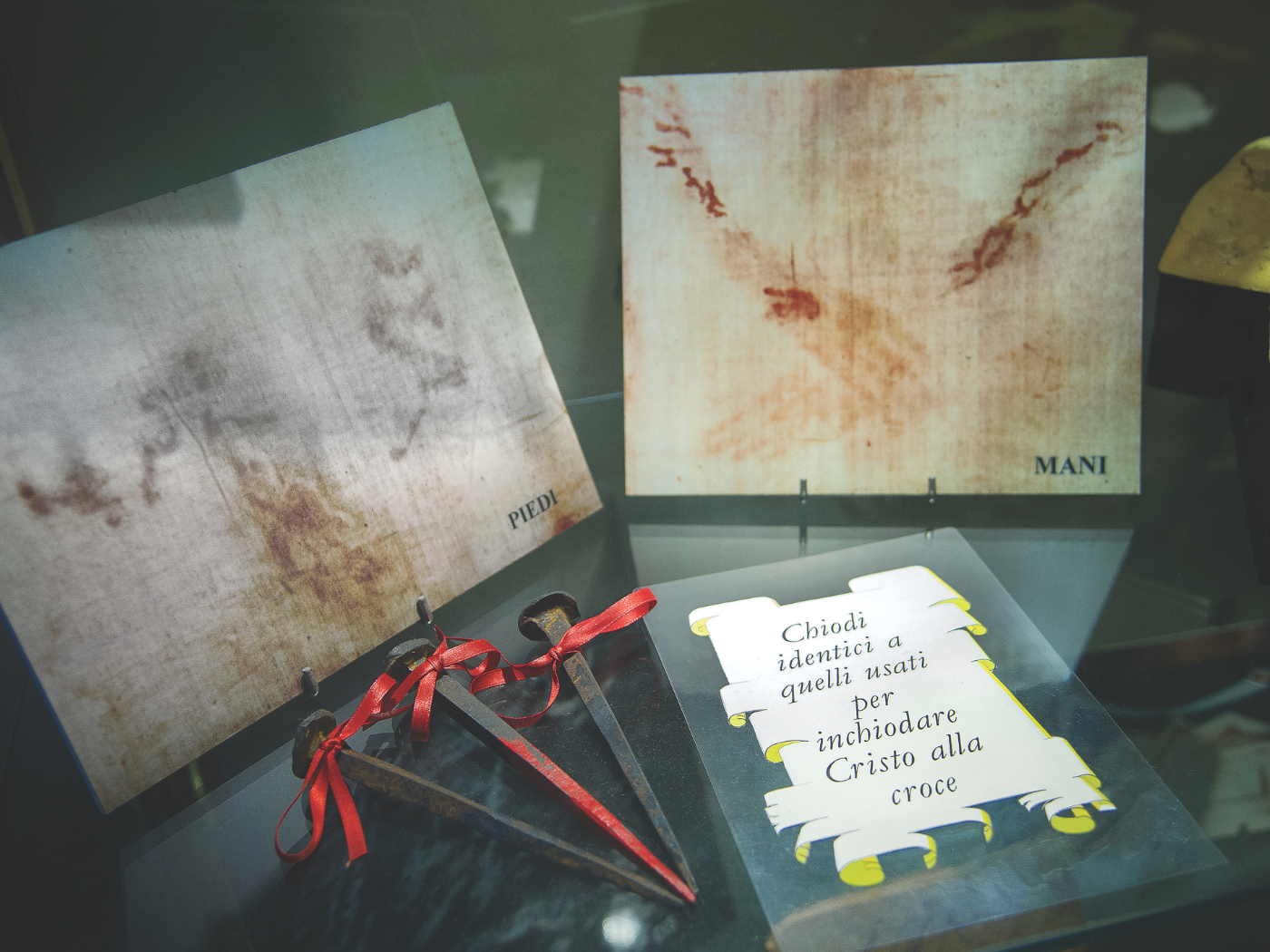
A photographic negative of the cloth shows a three-dimensional image of a crucified man so accurate in anatomic detail that scientific tests today can diagnose his multiple injuries. Its 372 bloodstains point to a crucifixion resembling that of Jesus by Roman authorities in 33 AD. The Shroud reveals details that correspond to the wounds described in the Gospels and hints at bodily transparency suggestive of the resurrection.
The authenticity of the Shroud was challenged by carbon dating in 1988 which dated its origins in the Middle Ages, suggesting it had been produced by a medieval forger. However, the sample tested by carbon dating was compromised by repairs to the cloth after a fire in 1532. Newer tests date the Shroud around the middle of the first century AD. Pollen grains embedded in the Shroud indicate it spent much of its time in Palestine.
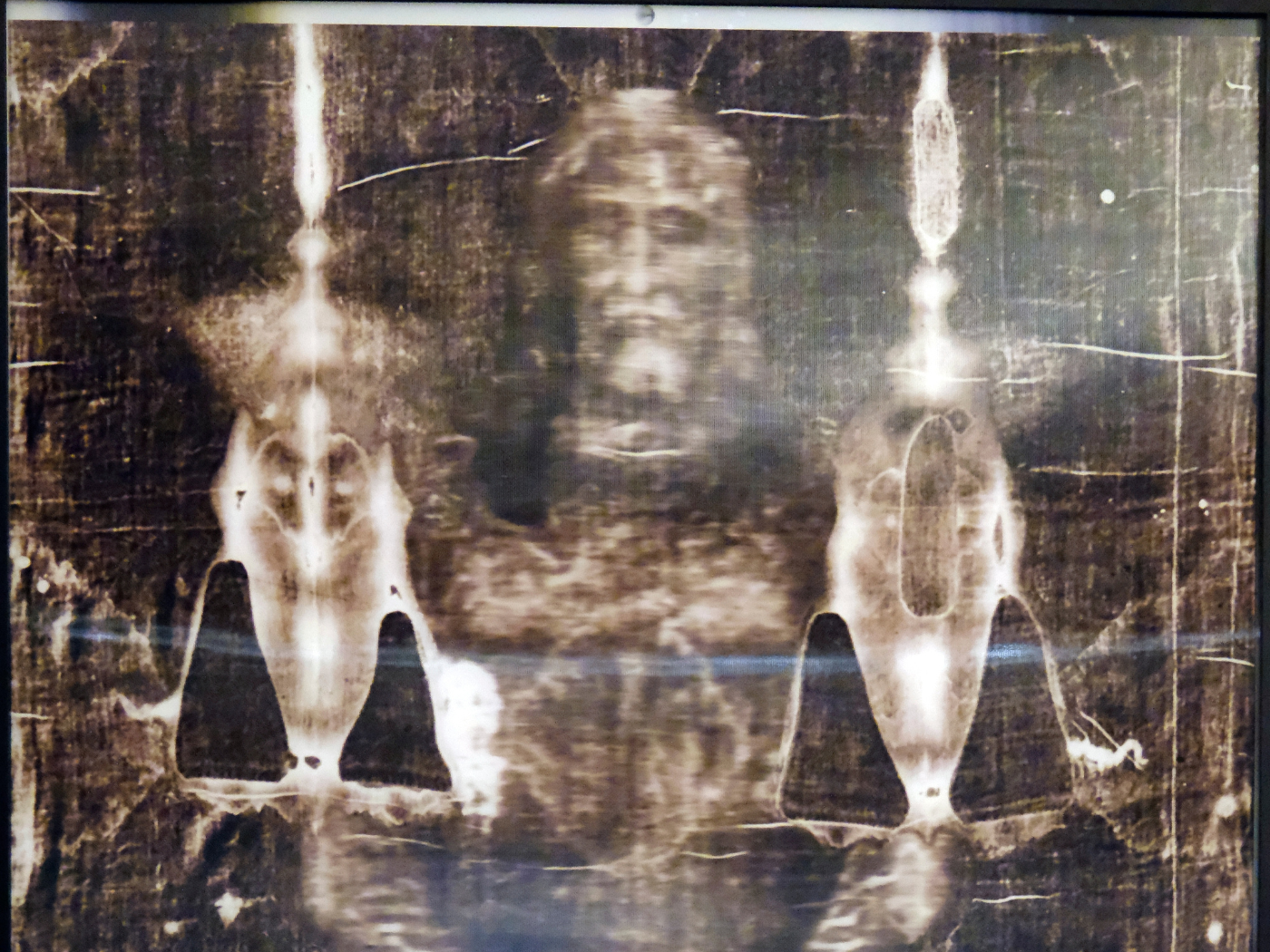
What is intriguing is that the image was not produced by any paint, dye, or chemical; it has no brush strokes. Scholars have identified coin imprints on the eyes of the man in the Shroud as very likely images of coins specially minted by Pontius Pilate in Jerusalem around 30 AD. Placing coins on the eyes of the deceased was a common practice at the time. When all the findings are combined, they present strong evidence that the Shroud originated in first century Palestine around the time of Jesus’ crucifixion.
Real bloodstains on the Shroud (blood type: AB) had congealed on the cloth before the image was formed and likely came from the tormented man in the Shroud. Insofar as the blood is real, and the image created after the bloodstains were embedded on the Shroud, it seems that the cloth enveloped a real man who was crucified in a manner similar to the crucifixion of Jesus.
The Shroud of Turin and the Passion of Christ
The man in the Shroud was scourged by two soldiers using a Roman whip consisting of three thongs with lead pellets at the end of each thong. The scourging left multiple lash marks that covered the man’s back, thighs and calves, reaching around to his sides and part of his chest, causing him to bleed profusely. Three of the Gospels specifically mention that Jesus was scourged (Mt.27:26) which was a common Roman practice for criminals. Pilate wished to have Jesus scourged so that the Jewish crowds would be satisfied that Jesus had been punished for alleged blasphemy. He hadn’t committed a capital offense according to Roman law, and despite Pilate’s protestations of Jesus’ innocence, the crowds demanded his crucifixion and Pilate gave in to their request (Jn.19:1-16; Lk.23:13-25).
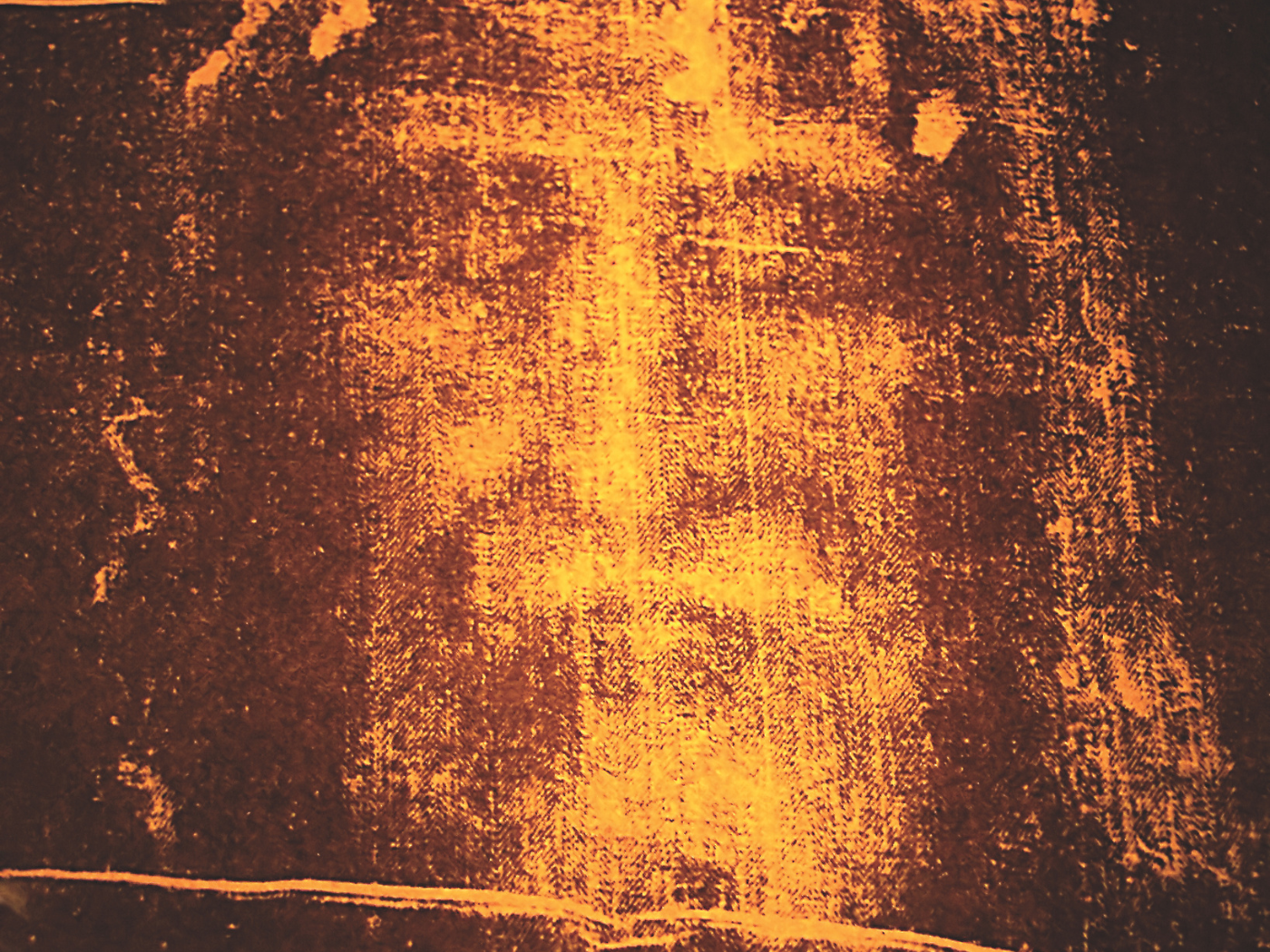
The man in the Shroud was also severely wounded by a crown of long thorns that penetrated the scalp. It was woven like a cap so that the crown would penetrate the top of the man’s head as well as the forehead, temples, and back of the head. The thorns would have produced excruciating pain and considerable bleeding. The crown of thorns is unique to Jesus’ crucifixion because of a charge levelled by the chief priests that Jesus claimed to be king of the Jews (Mt.27:27-31 and par.).
A dislocated shoulder has been identified which indicates that the man in the Shroud had a large blunt object on his right shoulder. When he fell forward it hit him so hard that it caused a dislocated shoulder and paralysis on the upper right side. Scrapes on the man’s knees confirm the fall as well. With his upper body paralysed, it would have rendered him incapable of carrying a cross. These injuries would have exacerbated the pain of the man when later he hung on the cross, making his breathing difficult and thereby shortening his life. The injuries may be explained by circumstances surrounding Jesus’ crucifixion. Although the Gospels do not mention a fall, the Gospel of John states that Jesus carried his own cross (Jn.19:17) but that along the way, the other Gospels relate, the soldiers compelled Simon of Cyrene to carry the cross for Jesus enabling him to reach Golgotha (Mt.27:32 and par).
The man in the Shroud was fixed to a cross with nails that went through the palms but exited through the wrist to sustain the weight of a human body and agrees with the nail wounds on the hands of the risen Christ as the Gospels report (Lk.24:39; Jn.20:20,25,27). The nails would have caused unbearable distress. It is difficult to determine whether the feet were nailed side by side to the upright beam or that one foot was placed on top of the other using a single nail.
The man in the Shroud was pierced on the right side by a spear resembling a Roman lance. The wound exuded both blood and a watery substance detectable on the Shroud and points to a unique feature of Jesus’ crucifixion. The Gospel of John reports this feature and insists that it was seen by reliable eyewitnesses (19:34-35), indicating thereby both the likely authenticity of the Shroud as well as the accuracy of John’s account of the crucifixion.
The Shroud of Turin and the Resurrection
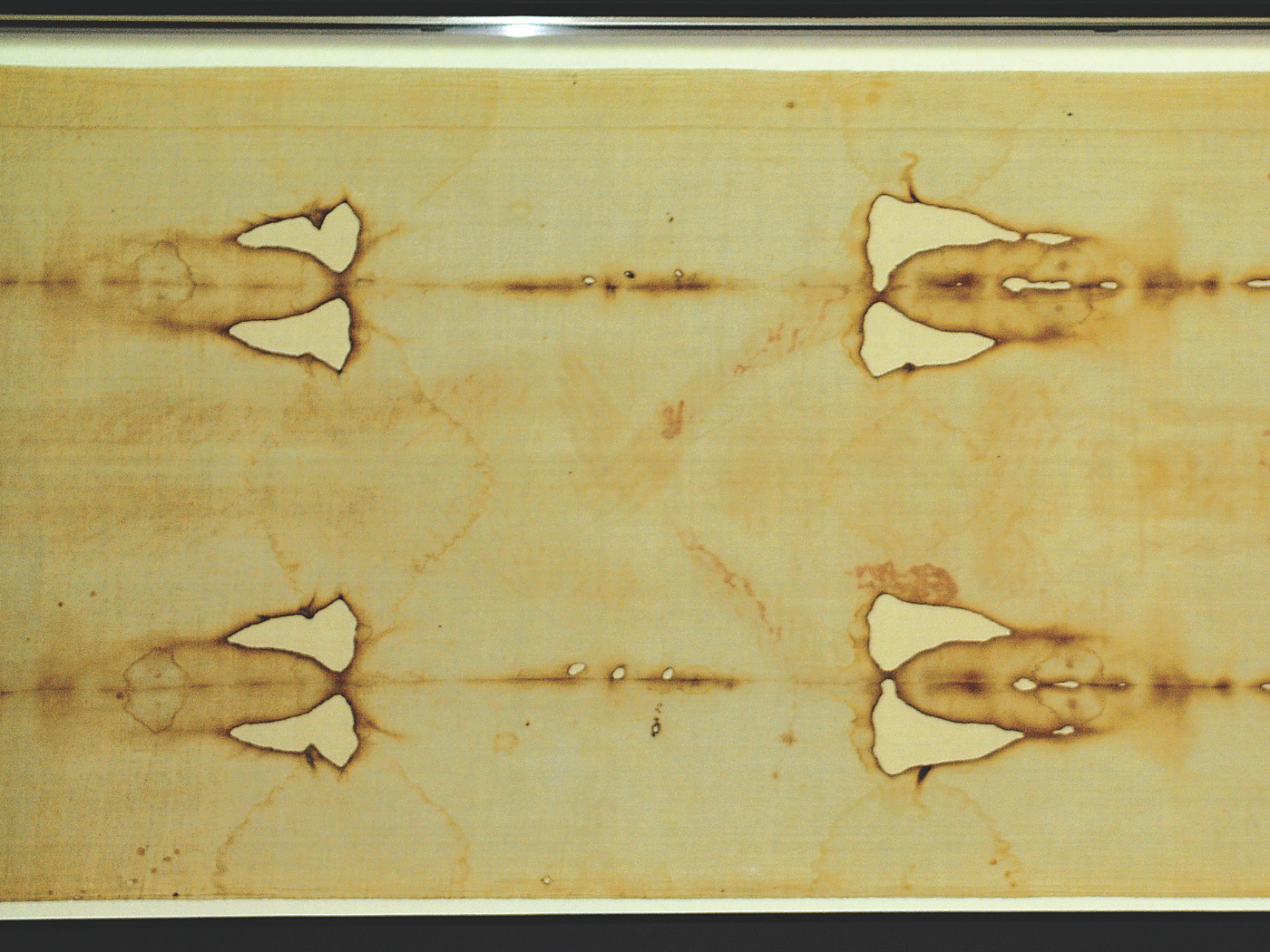
The precise three-dimensional photographic negative image on the Shroud of Turin appearing on a non-photographically sensitive linen cloth cannot be replicated by traditional physical, chemical, or biological processes. It is likely that the image was produced by a momentary intense form of low radiation accompanied by the transparency of the radiating body of the deceased person and admits of no natural or scientific causation. Furthermore, since the cloth did not make contact with every part of the body, only radiation can act at a distance while other image agents do not. It is the only physical explanation capable of explaining all the features. This unique image produced discolouration on the uppermost surface of the Shroud, engendered by an unidentified process, colouring it straw yellow.
Scientists are inclined to favour a particle radiation hypothesis as the source of the radiation and the cause of the transparency of the body. Instantaneous atomic disintegration of the physical body would produce particle radiation on both the frontal and dorsal surfaces of the Shroud with equal intensity, and the body would become transparent. Heavily charged particles would have formed a three-dimensional highly precise image on the cloth. This would explain both the image and the transparency of the body. The particle radiation hypothesis has no known natural cause, yet it best explains all the unusual features of the image, the cloth, and the blood. We are dealing with the beginning of a miraculous event because it marks the point at which the body moved from a physical state to a trans-physical glorious state, leaving behind a flash of bright light and producing a perfect three-dimensional photographic negative.
There are other aspects of the image on the Shroud and the condition of the cloth that require clarification. The body disappeared from the Shroud without distorting any of the 372 blood stains that had already been transferred to the Shroud, none were broken or smeared. This suggests the possibility of a supernatural cause because there is no natural explanation for the unique image, the integrity of the blood stains, or the excellent condition of the cloth. It seems that other particles of the nuclear disintegration penetrated the linen cloth which would have strengthened it, making it resistant to chemical reactions. This would account for the lack of “ageing” that might be expected in material 2000 years old that had been subjected to repeated ill-treatment.
Biblical scholars today are generally in agreement that Jesus’ disciples experienced him as risen from the dead and spiritually transformed in a glorified body. We may ask why the early Christians would have risked such a doctrinal rift from Judaism when they continued to respect other doctrines and did not wish to break from the synagogue? The reason had to be more than an empty tomb and was more likely an experience of a spiritually transformed and glorified Jesus, an appearance that was continuous with his former embodiment but transfigured in spirit, power, and glory (Mt.28:9-20; Lk.24:36-43; Jn.20:19-21; Acts 9:3; 22:6).
How does the image on the Shroud suggest the resurrection of Jesus? A powerful, split-second source of low particle radiation could have caused the image formation and bodily transparency, something akin to becoming spiritual. St Paul coined the term “spiritual body” to describe this phenomenon (1 Cor.15:44). The powerful radiation giving off light with bodily transparency is suggestive of “becoming spiritual” and corresponds to the testimony of the Gospels, Pauline letters, and Acts of the Apostles. One could say that the radiation and bodily transparency which caused the image on the Shroud were the gateway to a risen body transformed in spirit, power, and glory. A precise three-dimensional photographic negative image with encoding of the interior of the body is completely beyond natural causation. And how was the body removed from the Shroud without disturbing or smearing the bloodstains?